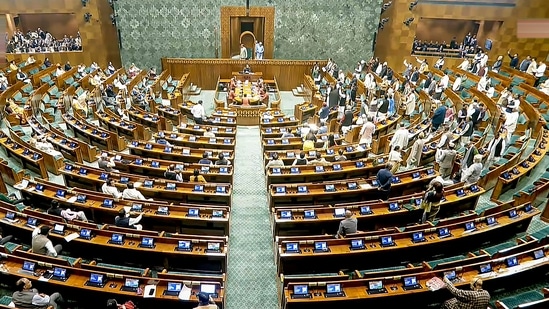
In an unprecedented development since 2004, the Lok Sabha on Thursday adopted the Motion of Thanks on President Droupadi Murmu’s address to the joint sitting of Parliament without a reply from Prime Minister Narendra Modi.
The Prime Minister was scheduled to respond to the Motion of Thanks on Wednesday during the ongoing Budget Session. However, repeated disruptions, sloganeering, and protests by Opposition members forced the Speaker to adjourn the House before the reply could take place.
When the Lok Sabha reconvened at 11 am on Thursday, proceedings were again stalled shortly after they began. Members of the INDIA bloc raised slogans against the government, leading to another adjournment. Amid the continued disruptions, the House passed the resolution thanking the President for her address, marking a rare procedural departure.
Opposition Protests Over Rahul Gandhi’s Right to Speak
Opposition Members of Parliament stated that their protest stemmed from the alleged denial of the right to speak to Lok Sabha Leader of the Opposition Rahul Gandhi. According to the Opposition, Gandhi was prevented from addressing the House and from quoting former Army Chief General MM Naravane’s unpublished memoir related to the 2020 India-China border standoff.
The Opposition has described the move as an erosion of parliamentary convention and democratic norms, while government benches have maintained that repeated disruptions made it impossible to conduct proceedings smoothly.
Historical Context: What Happened in 2004
A similar incident occurred in 2004, when the Bharatiya Janata Party prevented then Prime Minister Manmohan Singh from replying to the Motion of Thanks on the President’s Address.
Congress leader Jairam Ramesh recently shared archival footage from March 10, 2005, in which Manmohan Singh referred to the June 10, 2004 episode, recalling how he was not allowed to respond to the Motion of Thanks during his first year in office.
The passage of the Motion of Thanks without the Prime Minister’s reply highlights ongoing tensions in Parliament and underscores challenges to maintaining orderly debate during crucial legislative sessions.