The historic railway tracks of the old “garjat” rulers, namely Parlakimedi (Paralakhemundi) and Mayurbhanj were proof of the erstwhile rulers’ pro-people vision and their remnants are still doing the story-telling with the people of the bygone era.
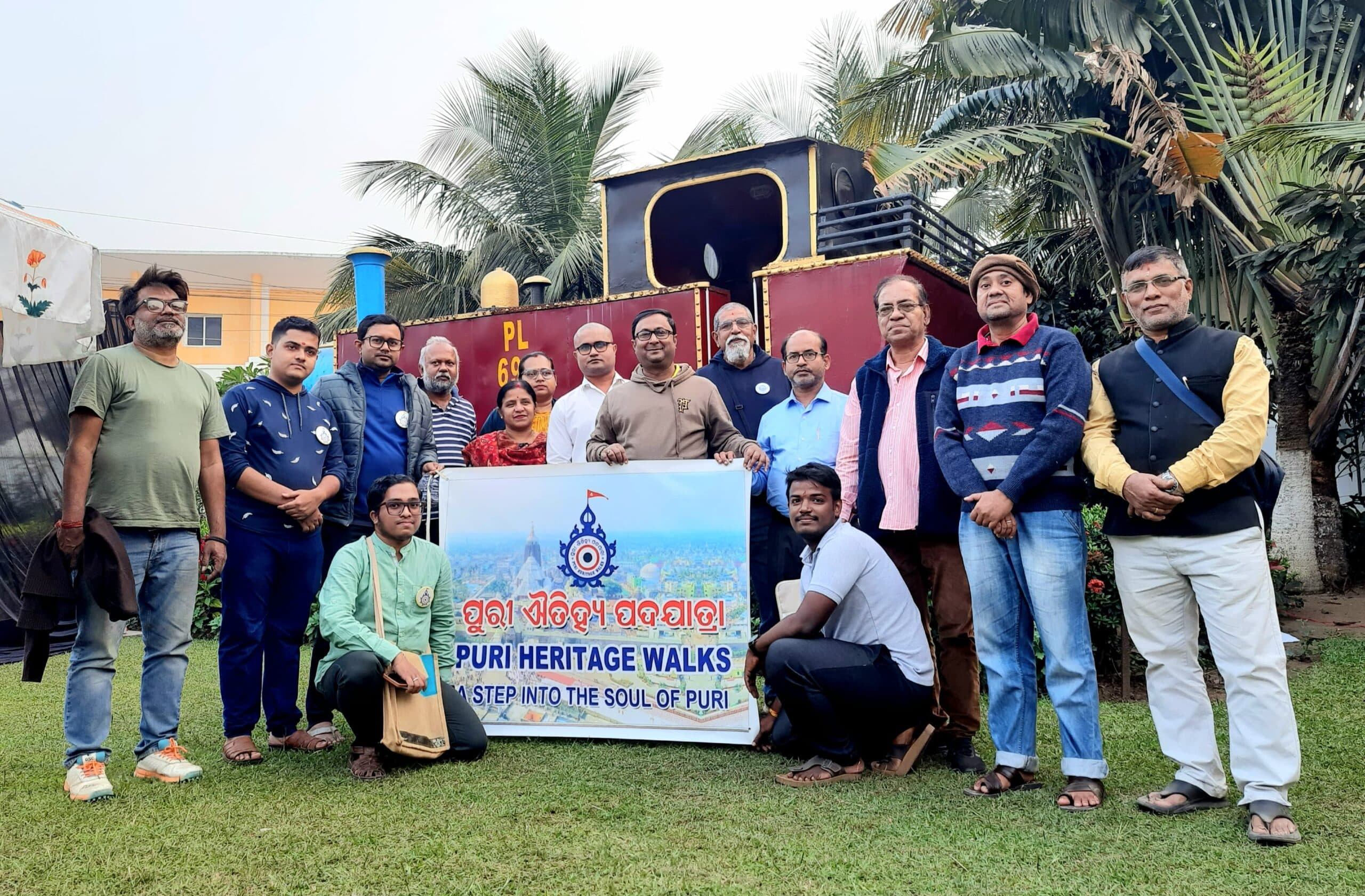
On Sunday afternoon, members of Puri Heritage Walks (PHW) during their 16th heritage trail, encountered with a restored engine of the Nuapada–Gunupur line under the old Parlakimedi Light Railway (PLR), displayed on the lawn of Chanakya BNR Hotel, on the historic Chakratirtha Road.
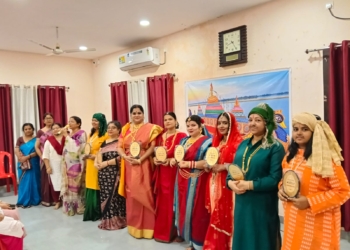
With more than 20 heritage enthusiasts from different parts of the State the walkers started it with a visit to Chanakya BNR Hotel, one of the prominent colonial-era heritage buildings of Puri. Originally known as Ashworth Villa in 1922, the building was later purchased by the Indian Railways in 1925 and established as a railway guest house. Today, it is regarded as a symbol of Puri’s modern heritage.
The participants were briefed in detail about the hotel’s history, architecture, and various phases of transformation by the property’s manager Pabitra Kumar Sarkar and the heritage enthusiasts were led by PHW advisor Debi Prasanna Nanda.
The historic steam railway engine PL 692, installed in front of the hotel, became a major attraction for the heritage enthusiasts. Considered a priceless heritage of the early phase of Indian Railways, the engine drew keen interest from the PHW members. This narrow-gauge engine was part of the Nuapada–Gunupur line under PLR.
The participants also toured the hotel campus spread over three and a half acres. They also visited the heritage restaurant, and viewed several antique artifacts that reflect the lifestyle and tastes of the bygone era. It is noteworthy that many eminent personalities from India and abroad, including former prime ministers Pandit Jawaharlal Nehru and Indira Gandhi, Nobel award winning poet Rabindranath Tagore, film maker Satyajit Ray had been guests at this hotel in the past. The hotel was also a favourite destination for Biju Patnaik.
ARRY OF SHRINES
After enjoying their time at the historic Railways property, the members proceeded towards Chakratirtha Road and visited the Chakra Nrusimha Temple, Bedi Hanuman Temple, Sunar Gouranga, and the sacred Chakratirtha Temple. All these temples are deeply associated with the religious, mythological, and cultural traditions of Puri. Chakratirtha and the surrounding sacred sites are integrally connected with the rituals of Shree Jagannath Temple. Located near the Mahodadhi (Bay of Bengal), these religious sites represent the unique spiritual glory of the “Shankha Kshetra”. In this context, Chakratirtha, Chakra Nrusimha, and Bedi Hanuman temples hold special importance.
On Pana Sankranti or Mahavishuva Sankranti, the birth of Lord Hanuman is celebrated in Shreekhetra. On this occasion, “Agyan mala” (divine permission) is brought from the Shree Jagannath Temple to Bedi Hanuman, where rituals such as “Agyan mala Lagi”, “Sheetala Bhoga”, and “Bandapana” are performed by the Puja Panda. The idol of Mahavir worshiped in the sanctum sactorum holds a mace in one hand and a mountain in the other. From an archaeological perspective, the idol is believed to have been established by the rulers of the Ganga dynasty.
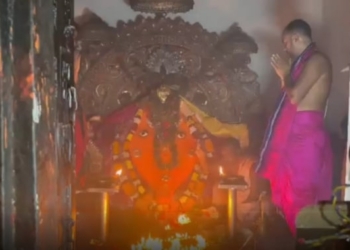
At the Chakra Nrusimha Temple, three rare forms of Nrusimha are worshiped. In the central part, within the Sudarshan Chakra, is Lord Lakshmi Nrusimha; on the left is the Yogarudha form, and on the right is the Adi Nrusimha form. Though all three are forms of Lakshmi Nrusimha, the temple showcases diverse modes of Nrusimha worship. These idols date back to the Ganga period and possess a history of nearly 1,000 years, comparable to that of the Shree Jagannath Temple. Behind the Chakra Nrusimha Temple, still remains the remnants of the sand chariot (Bali Ratha) associated with Balaram Das, a medieval preacher of “Utkaliya Vaishnavism”, along with the small cave, where he is believed to have resided.
Finally, Chakratirtha stands as a unique sacred site of Shreekhetra, where instead of an anthropomorphic idol, the Sudarshan Chakra—the divine weapon of Lord Narayana—is worshiped. In a later phase, a temple was constructed here and the worship of the “Chaturdha Murti” commenced.
The heritage walk concluded with a visit to the PHW Library located on Station Road, where members shared their experiences of the day and discussed the importance of preserving Puri’s rich heritage. The walk was successfully conducted with the support of conveners Biswaranjan Dehury and Dr. Kumar Aurojyoti, co-conveners Ashoka Manjari Nayak and Pandit Sidharth Acharya.