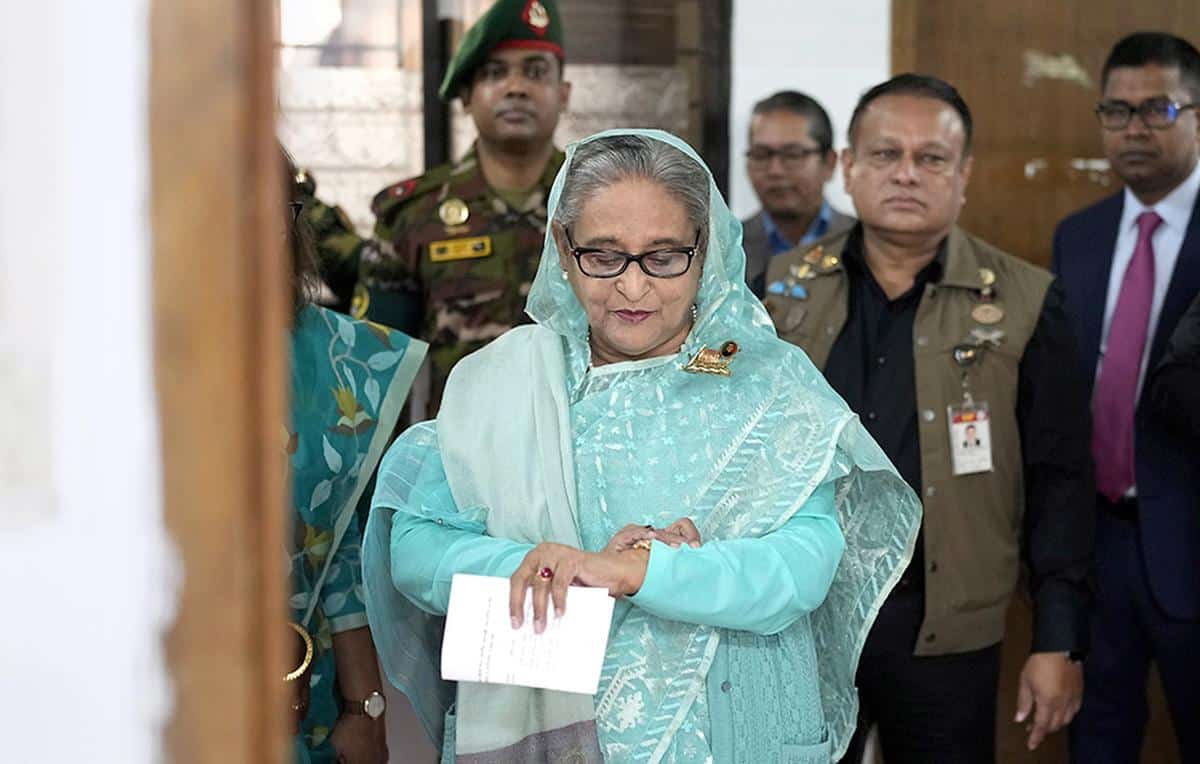
Bangladesh has written to India requesting the return of former Prime Minister Sheikh Hasina, who was sentenced to death in absentia by a special tribunal on Monday. The foreign ministry said India has an “obligatory responsibility” under an existing extradition agreement to hand her over.
Bangladesh Cites Extradition Agreement
In its letter, the Bangladesh foreign ministry called Sheikh Hasina a “fugitive accused.” It said providing her refuge would be “a highly unfriendly act” and a “disregard for justice.” The request follows the International Crimes Tribunal’s verdict, which found Hasina guilty of crimes against humanity linked to last year’s student-led protests.
The tribunal also convicted former home minister Asaduzzaman Khan Kamal and former Inspector General of Police Chowdhury Abdullah Al-Mamun on similar charges.
What Led to Hasina’s Sentencing
In August 2024, Sheikh Hasina was ousted after a massive student uprising swept across Bangladesh. The protests, which began in July, grew nationwide and ended her rule. She was then forced to leave the country and has been in India since her removal from power.
A Dhaka court found her guilty of incitement, ordering killings, and failing to prevent violence during the crackdown. The judgment was broadcast live on national television, drawing strong reactions across the country.
Hasina’s Life in Exile
Hasina has been living in a safe house in Delhi for over a year. Her son, Sajeeb Wazed, previously said India has provided her with full security. In earlier statements, she expressed gratitude to India for offering her protection during a difficult time.
She has refused to return to Bangladesh despite repeated summons, saying the tribunal lacks legitimacy and due process. Hasina also claims she was denied a fair chance to defend herself.
What Happens Next
The request from Bangladesh puts India in a delicate diplomatic position. India has not yet responded publicly. With national elections approaching in Bangladesh in February 2026, the decision could have significant political implications for both countries.