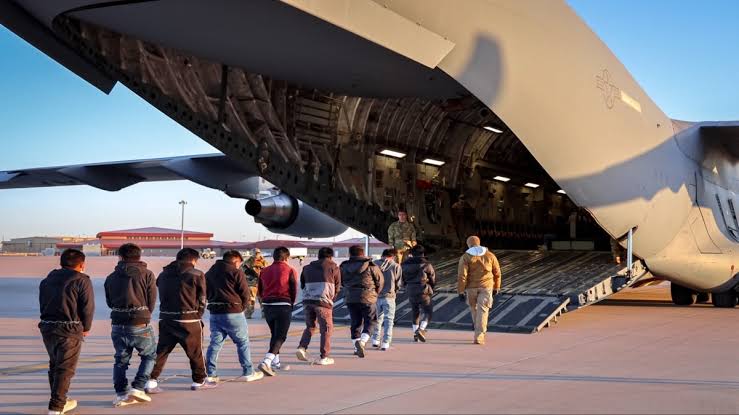
Amritsar: A U.S. military aircraft carrying 116 Indian nationals deported from the United States landed at Sri Guru Ram Dass Jee International Airport in Amritsar late Saturday night. This marks the second group of Indians repatriated under the Trump administration’s intensified crackdown on illegal immigration.
Sources confirmed that while male deportees were restrained during the flight, women and children were not shackled. The deportees hail from various states, including Punjab, Haryana, Gujarat, Uttar Pradesh, Goa, Maharashtra, Rajasthan, Himachal Pradesh, and Jammu and Kashmir.
The arrival of the deportation flight has sparked political controversy. Punjab Chief Minister Bhagwant Mann criticized the central government’s decision to land the plane in Amritsar, alleging it was an attempt to tarnish Punjab’s image. He questioned why Amritsar was chosen over other airports, suggesting a deliberate move to defame the state.
In response, the Bharatiya Janata Party (BJP) accused the Aam Aadmi Party (AAP) government in Punjab of failing to curb fraudulent travel agents, which has contributed to illegal immigration. BJP leaders argued that the state government should focus on creating employment opportunities to prevent residents from seeking illegal avenues abroad.
This development follows a similar incident earlier this month when a U.S. military plane with 104 deportees landed in Amritsar. The deportations are part of ongoing efforts by U.S. immigration authorities to address illegal immigration by repatriating individuals who either entered the country unlawfully or overstayed their visas.
The Indian government has stated that it is engaging with U.S. authorities to ensure that deportees are treated humanely during the repatriation process. External Affairs Minister Subrahmanyam Jaishankar noted that while U.S. regulations permit the use of restraints during deportation flights, efforts are being made to prevent any mistreatment of Indian nationals.
As deportation flights continue, the issue remains a point of contention between state and central authorities, as well as a topic of public debate regarding the treatment of deportees and the broader implications for India’s international relations.

Second US Deportation Flight Lands in Amritsar Amid Controversy







Trending
Forester found hanging at Balangir Range Office quarter
The body of a forester was recovered in a hanging condition from the official quarter of the...




News, as it should be covered, has been the forte of Pragativadi over the years. And this has ensured a classy readership encompassing the who’s who of the state. The people who matter in Odisha, depend on Pragativadi. For opinion leaders, decision makers and people with surplus disposable income Pragativadi is a must.


