For years, bamboo in Odisha has been closely associated with traditional crafts and small-scale livelihoods. Now, the state is setting its sights on a much bigger canvas: large-scale industrial manufacturing, bioenergy, and green supply chains.
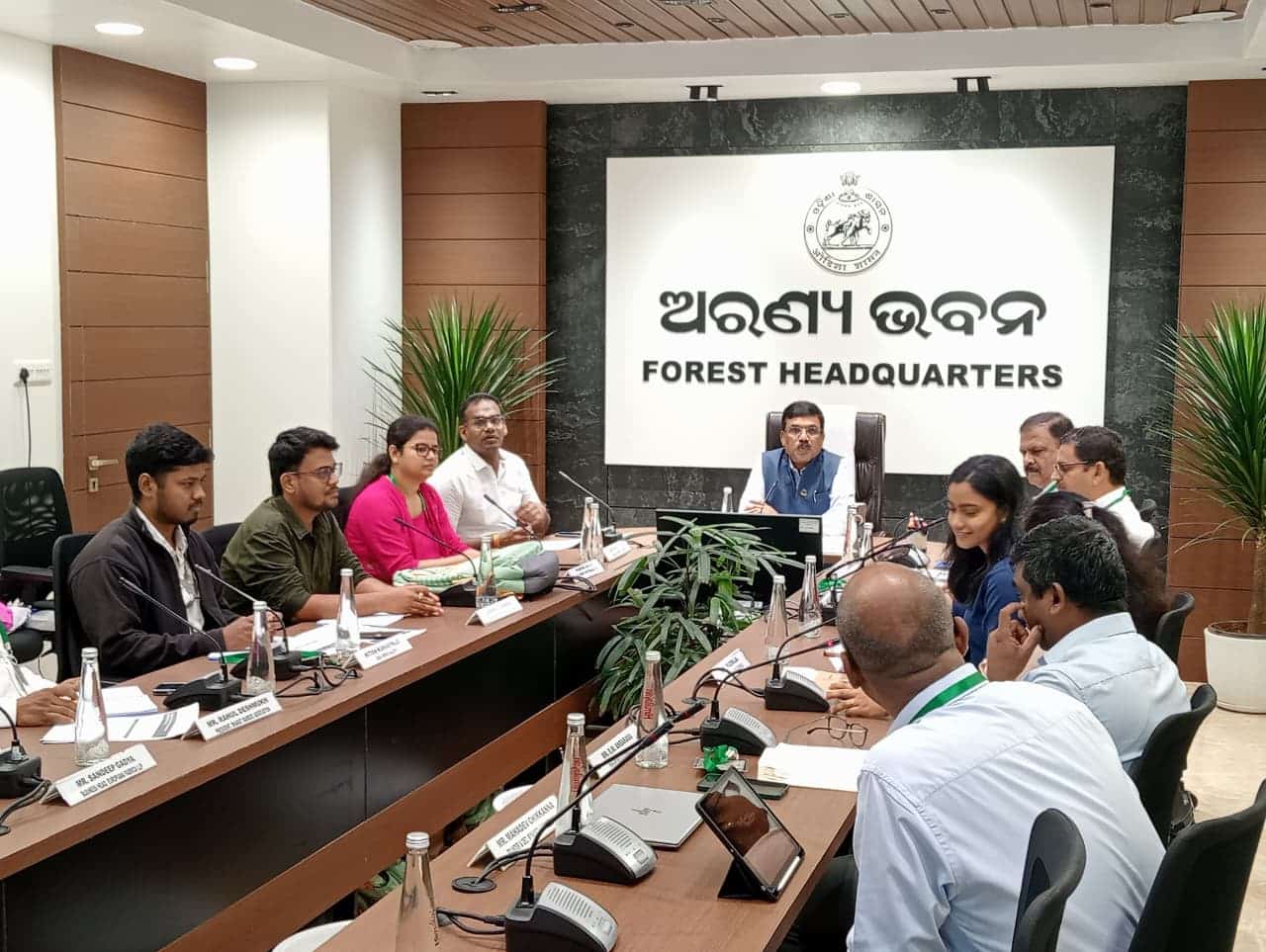
The Government of Odisha has laid the groundwork for a comprehensive State Bamboo Policy aimed at unlocking the sector’s untapped economic potential and driving sustainable growth. The inaugural milestone—a one-day industry consultation—took place at Aranya Bhawan in Bhubaneswar, hosted by the Odisha Bamboo Development Agency (OBDA) with technical support from the Bharti Institute of Public Policy (BIPP) at the Indian School of Business (ISB).
Industry Leaders Gather to Shape the Roadmap
The roundtable brought together representatives from 12 organisations spanning manufacturing, paper, climate tech, and clean energy, including Tata Steel, JK Paper, Sai Bioenergy, KONBAC, Mynusco, Crbnfix, Bamboo India, Euphoria, BILT, Praj, Star Cement, and Bhavya Shristi Udyog.
Delivering the presidential address, Dr K. Murugesan, IFS, Principal Chief Conservator of Forests and Head of Forest Force (PCCF & HoFF), Odisha, noted that while bamboo holds immense promise across the state, much of its potential remains underutilised. Scaling up from traditional handicrafts to industrial applications—especially bioenergy—could create fresh employment avenues and bolster rural incomes.
Karthick V, IFS, State Mission Director of OBDA, underscored the need for a predictable, investment-friendly policy environment that lowers barriers for first-time and early-stage entrants. Securing steady raw material supplies, expanding bamboo plantations, and building stronger farm-to-factory linkages will be central to attracting serious capital.
Moderating the discussion, Kamini Singh of BIPP-ISB focused on turning practical industry feedback into clear policy levers that improve ease of doing business, deepen market access, and benefit both bamboo growers and community institutions.
Tackling Supply, Permitting, and Market Bottlenecks
Participants spent the session dissecting both sides of the value chain—from raw material availability to industrial off-take. Key themes included:
-
Resource & Yield Gaps: Assessing per-acre productivity, mapping available resources, and matching the right bamboo species to specific industrial uses.
-
Regulatory & Logistics Hurdles: Addressing friction around harvesting and transit permits, farmer off-take agreements, and fair price discovery for growers.
-
Industrial Clustering & Demand: Ensuring sufficient local bamboo supply to set up processing units near production hubs, freeing up plantation land, attracting new investors, and expanding public procurement of bamboo products.
Next Steps in the Policy Rollout
With industry perspectives now on the table, OBDA and BIPP-ISB plan to widen the conversation in January 2027 to technical institutes, researchers, farmers, artisans, producer collectives, and partner government departments—aiming for a policy framework that is market-driven, competitive, and inclusive.