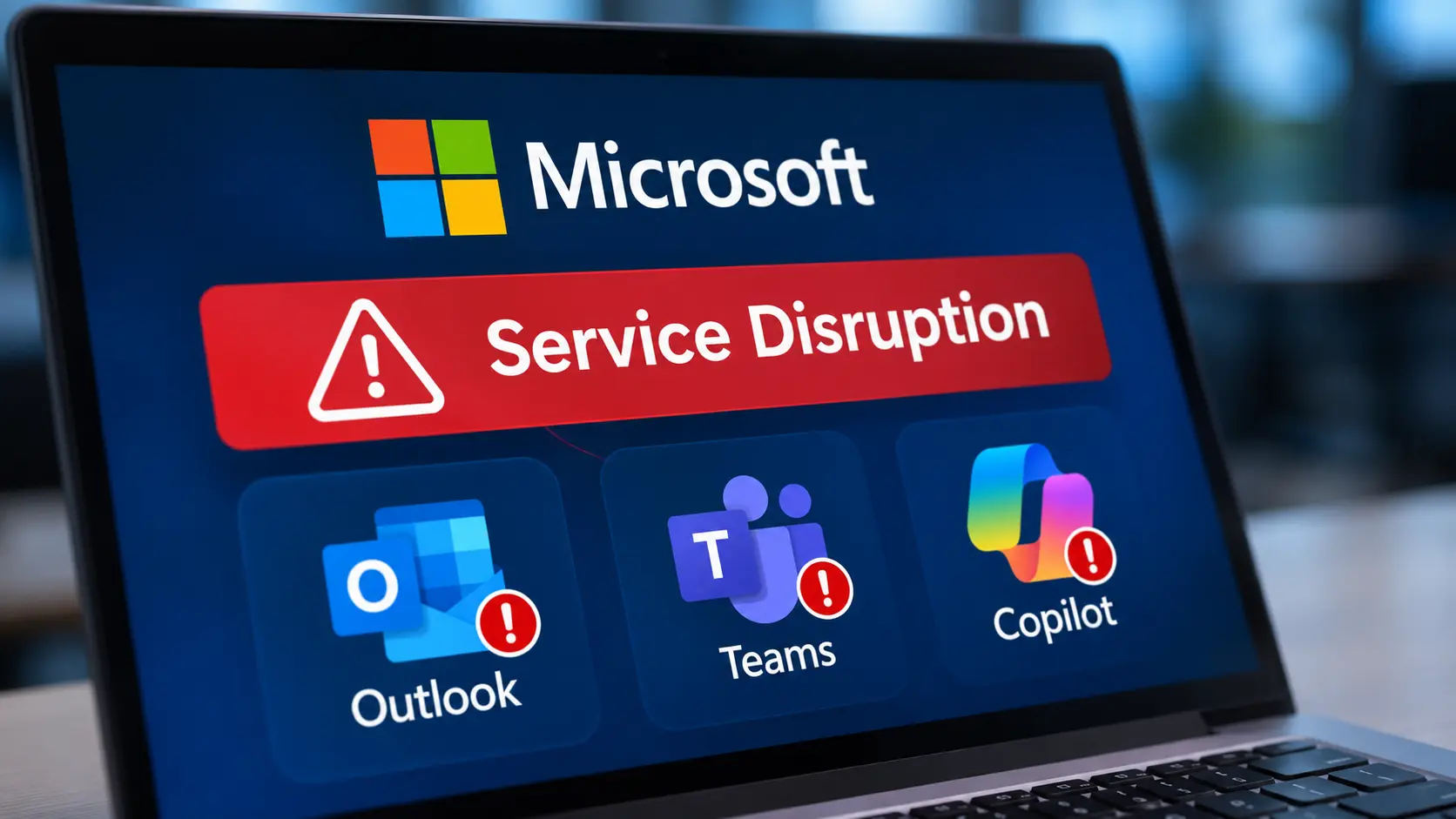
A cascading infrastructure failure triggered by failed automated server health checks and an overwhelmed core security-connection process caused the multi-hour global Microsoft outage that crippled Microsoft 365, Outlook, Teams, OneDrive, and Office on the web.
While Microsoft’s public Service Health Status dashboard listed customer services as “operational” on Friday morning, November 13, 2026, updates from the company’s official Microsoft 365 Status account confirmed that widespread “service degradation” persists as initial configuration fixes failed to deliver expected relief.
How a Cascading Infrastructure Failure Took Services Offline
Microsoft explicitly ruled out both a cyberattack and a sudden spike in external user traffic. Instead, engineers traced the disruption (tracked under incidents EX1550543 and MO1550821) to an internal capacity domino effect:
- Automated Health Check Shutdowns: A core server process responsible for handling secure connections became overwhelmed, causing multiple servers to fail automated health checks and automatically drop offline.
- Domino Effect on Remaining Infrastructure: As affected machines shut down, traffic was rerouted onto the remaining online servers—creating severe load imbalances that caused further servers to stall.
- Why Server Restarts Haven’t Solved It: Depending on hardware and workload, hard-rebooting an unresponsive enterprise server takes up to 30 minutes and often triggers lengthy disk-integrity checks on large storage drives. Worse, Microsoft noted that several restarted servers became unresponsive again once live traffic returned.
Current Recovery Status & Next Steps
After testing a configuration change and rolling back a recent update correlated with the start of the disruption, Microsoft engineers are deploying alternate traffic-management pathways to restore capacity.
- Email & Exchange Bottlenecks: Services tied directly to Microsoft Exchange Online—such as Outlook inbox access, meeting scheduling, and new chat creation—remain the hardest hit, even as existing Teams calls and chats remain largely functional.
- Gradual Stabilization: Microsoft confirmed that a portion of restarted servers has remained stable, though full global restoration remains without an official timeline.