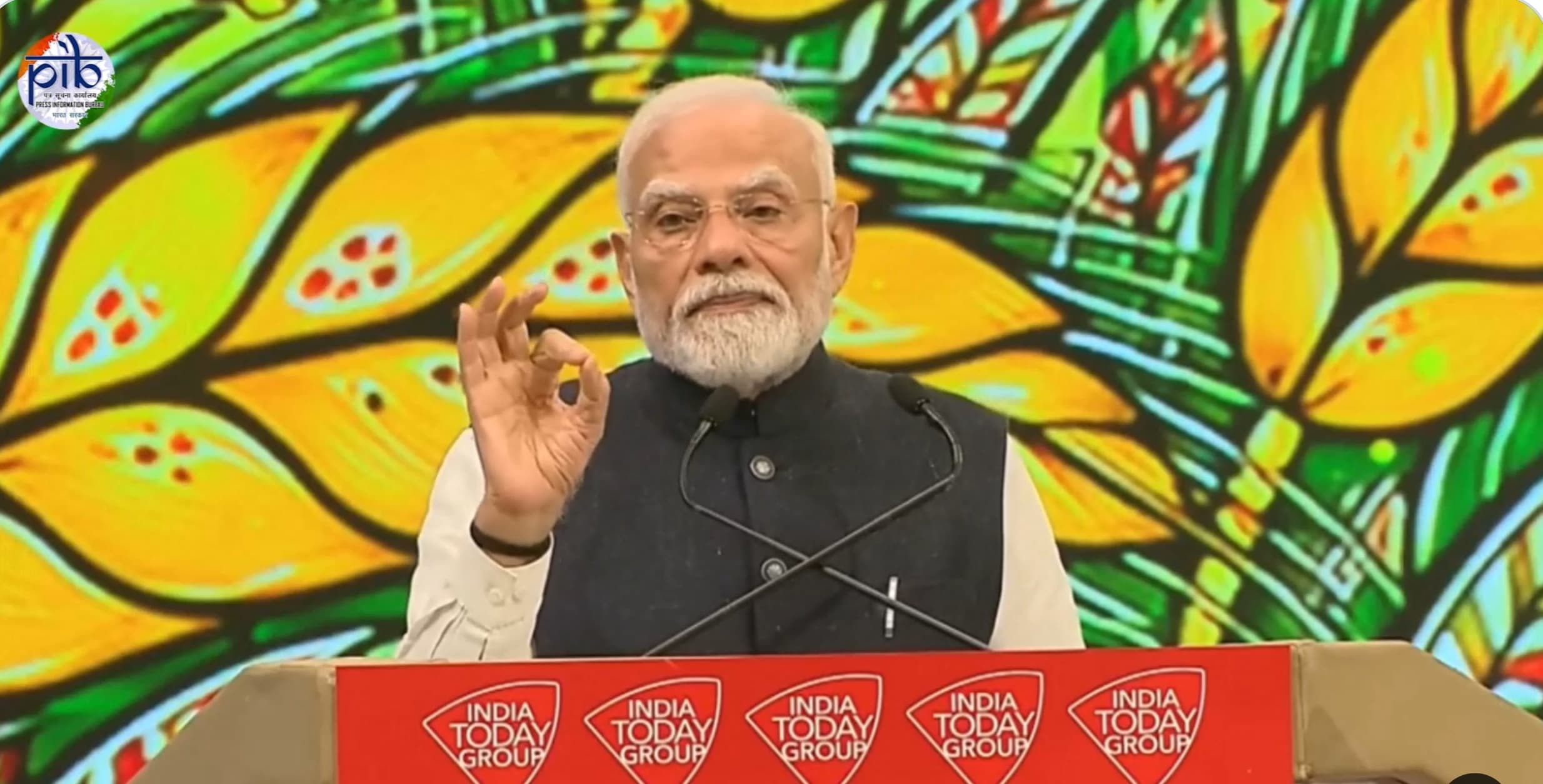
Prime Minister Narendra Modi has spotlighted India’s rising stature as a global agricultural powerhouse, stating that the country now exports agricultural products worth more than ₹4 lakh crore every year.
The remarks come from his address at the Kisan Tak Bharat Agriculture Conference 2026 and underscore how expanding trade is contributing to higher farmer incomes.
According to the Prime Minister, India holds the top global position in the production of milk, pulses, jute, and rice. It ranks second worldwide in wheat, cotton, fruits and vegetables, and fish, while also standing as the world’s largest producer of millets. “These are not just statistics; they reflect the immense potential and strength of India’s farmers,” Modi said.
These claims align with recent official and international data. India has overtaken China to become the world’s largest rice producer, with output estimated around 150–154 million tonnes in recent crop years, compared to China’s roughly 145–146 million tonnes. The country has long led in milk production (accounting for about a third of global fluid milk output) and millet production. It remains the largest producer of pulses and jute as well.
Agricultural exports have grown steadily. Figures cited by Commerce and Industry Minister Piyush Goyal place India’s agriculture and fisheries exports in the range of ₹4.5–5 lakh crore (roughly $52–55 billion), making India one of the world’s top agricultural exporters. Growth has been driven by rice, processed foods, fruits, and emerging products, with the export basket expanding to nearly 500 items. This revenue stream is positioned as a direct support for rural incomes.
Modi placed the current achievements in historical context, recalling the Green Revolution’s push for foodgrain self-sufficiency, the White Revolution that made India the top milk producer, and the Blue Revolution in fisheries. Over the past decade, milk production has risen by roughly 70 percent and egg production by about 90 percent, while fish production has more than doubled. Recent government estimates show record or near-record output in rice (kharif season at 124.5 million tonnes in 2025-26) and wheat (around 120 million tonnes), contributing to overall foodgrain production exceeding 350 million tonnes in recent years.
The message from the conference is clear: India’s agricultural strength is not only about domestic food security but also about global market reach and farmer prosperity. With continued focus on processing, branding, infrastructure, and climate-resilient varieties, the sector is positioned for further growth toward the government’s broader vision of making India a leading food supplier to the world.