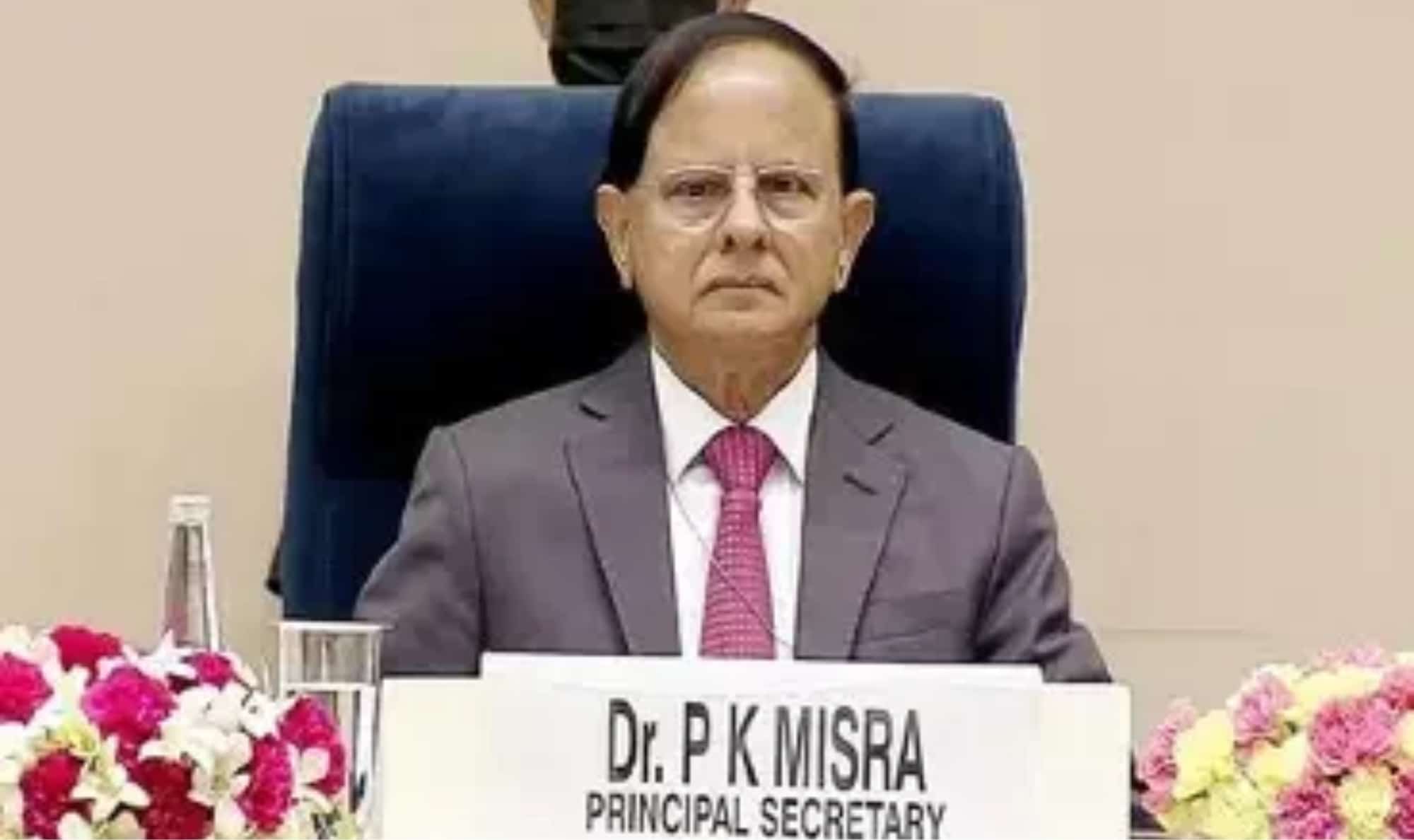
Addressing the 20th Annual Meeting of the Environment for Development (EfD) Network hosted by IIM Kozhikode via video conference, Dr P.K. Mishra, Principal Secretary to the Prime Minister, called for a decisive shift toward evidence-based policymaking to secure India’s agricultural future against escalating climate risks.
Dr Mishra emphasised that climate change can no longer be evaluated through an exclusively environmental lens. Its cascading effects directly threaten water security, crop yields, retail food prices, public health, and rural livelihoods across the nation.
Beyond Volume: Securing Diverse and Nutritious Diets
Highlighting the evolution of food security, Dr Mishra pointed out that aggregate production volume alone is an insufficient safeguard. The key challenge moving forward is ensuring consistent access to affordable, diverse, and nutrient-dense diets—such as pulses, fruits, vegetables, and dairy—which remain particularly susceptible to climate shocks.
“Data must help us anticipate challenges, not merely measure outcomes.”
— Dr. P.K. Mishra, Principal Secretary to the Prime Minister
Localised Adaptation for High-Risk Districts
| Metric / Assessment | Details |
| Total Agricultural Districts Assessed | 651 districts (under ICAR’s NICRA program) |
| Highly / Very Highly Vulnerable | 310 districts |
| Strategic Focus | Shift from uniform national policies to region-specific agro-climatic interventions |
To counter these vulnerabilities, Dr Mishra advocated combining administrative records, household surveys, satellite imagery, and geospatial tools under robust data safeguards. Strengthening analytical capabilities at the state and district levels will ensure real-time data directly informs resource allocation and field execution.
Global South Collaboration and Long-Term Targets
Reaffirming India’s long-term climate vision, Dr Mishra highlighted the national commitments toward becoming a developed nation by 2047 while reaching Net Zero emissions by 2070. India’s updated Nationally Determined Contribution (NDC) for 2031–2035 further underlines this balance between economic expansion, poverty alleviation, and environmental stewardship.
Concluding his address, Dr Mishra called on international academic platforms like the EfD Network to bridge the gap between scholarly research and active policy implementation across the Global South.