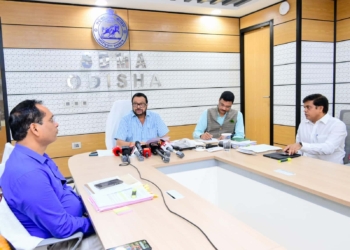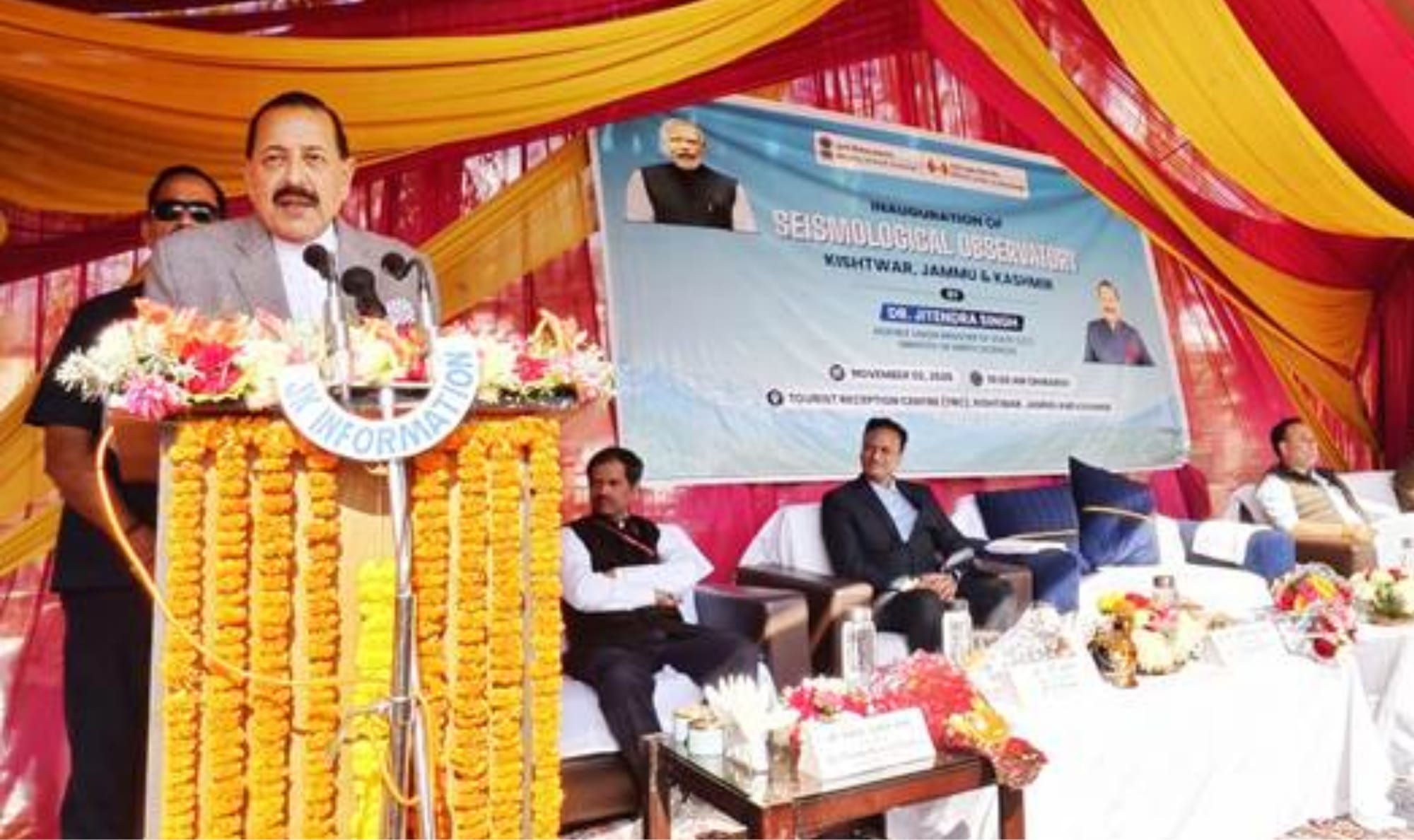
Union Minister of State (Independent Charge) for Science & Technology and Earth Sciences, Dr Jitendra Singh, officially inaugurated a state-of-the-art Seismological Observatory in the seismically sensitive district of Kishtwar.
The initiative marks a major milestone in strengthening disaster preparedness, early warning capabilities, and real-time environmental surveillance across Jammu and Kashmir.
The new Kishtwar facility becomes the fourth official Seismological Observatory in the Union Territory, joining active setups in Jammu, Srinagar, and Udhampur. Fitted with modern digital seismic gear, the observatory streams live tremor data directly to the National Centre for Seismology’s 24/7 Earthquake Monitoring Centre in New Delhi. The data will assist urban planners, local administrations, and rescue agencies in designing safer infrastructure and mounting rapid responses during natural calamities.
Jammu & Kashmir Meteorological Grid Evolution (2014 vs. Present & Planned)
┌───────────────────────────┬──────────────┬──────────────────┬─────────────────┐
│ Facility Network          │ 2014 Status  │ Present (2026)   │ Planned (2027)  │
├───────────────────────────┼──────────────┼──────────────────┼─────────────────┤
│ Doppler Weather Radars    │ 0            │ 4                │ 8 (Total)       │
│ Automatic Weather Stations│ 3            │ 12               │ Expanding       │
│ Rain Gauge Stations       │ 9            │ 15               │ Expanding       │
│ Seismological Observatories│ 3            │ 4                │ Strategic Sites │
└───────────────────────────┴──────────────┴──────────────────┴─────────────────┘
Rapid Expansion of Weather Surveillance
Speaking at the inaugural ceremony alongside senior Ministry of Earth Sciences officials and local public representatives, Dr. Singh traced the rapid transformation of the region’s meteorological framework over the last twelve years.
Prior to 2014, Jammu and Kashmir had zero Doppler Weather Radars (DWR) covering its mountainous terrain. Today, four operational radars are active at Banihal, Jot, Jammu, and Srinagar. Four additional units are scheduled for commissioning in 2027 across Doda, Kishtwar, Anantnag, and Baramulla, taking the overall surveillance network to eight.
The ground-level observation network has seen a parallel surge:
-
Automatic Weather Stations (AWS): Expanded from 3 to 12 stations, with dedicated units deployed in vulnerable pockets including Kishtwar (4), Doda (2), and Ramban (2).
-
Rain Gauge Network: Scaled from 9 to 15 stations across the constituency’s five districts to track micro-level precipitation patterns.
-
High-Altitude Research: Enhanced specialised monitoring at the High-Altitude Cloud Physics Laboratory in Patnitop and established the Regional Meteorological Centre in Jammu to issue localised early warnings.
Lesson-Driven Infra Boost After Severe Weather Events
The infrastructure drive gained targeted momentum following tragic weather events in the Chenab Valley, including cloudburst disasters in recent years that underscored the need for hyper-local warning capabilities. By capturing real-time atmospheric shifts and localised cloud movements, the new installations aim to prevent loss of life in landslide- and flood-prone terrain.
In addition to monitoring infrastructure, agromet advisories and weather forecasts are now broadcast directly to the Panchayat level across all five districts, reaching thousands of farming and rural families.
A Call for Public Trust in Scientific Warnings
Concluding his address, Dr. Jitendra Singh stressed that high-tech monitoring tools can only save lives if communities take scientific advisories seriously.
“Information is important, but following the information is equally important. Scientific weather warnings can save lives only when citizens cooperate with the administration during advisories and resist relying on unverified rumors.” — Dr. Jitendra Singh, Union Minister of State (IC) for Science & Technology and Earth Sciences