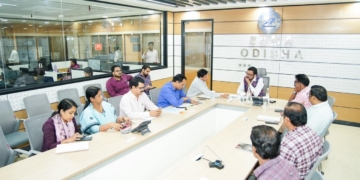
Union Minister of Railways Shri Ashwini Vaishnaw reviewed comprehensive emergency preparedness measures ahead of the anticipated landfall of Tropical Cyclone TC02B (Arnab) on October 28, 2026.
Emphasising that passenger safety remains the top priority, the Ministry of Railways has put robust safety protocols and rapid restoration teams on high alert across the South Coast Railway (SCoR) and East Coast Railway (ECoR) zones.
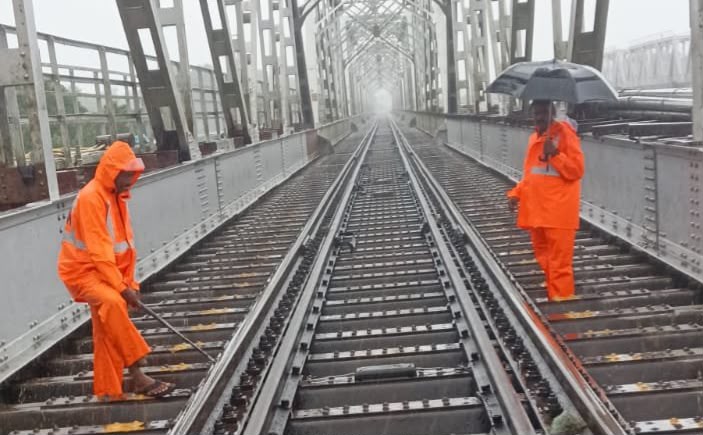
Approximately 600 kilometres of railway track passing through high-risk areas—including key sections within the Vijayawada and Visakhapatnam divisions—have been placed under continuous physical and technological surveillance.
Round-the-Clock Monitoring via Active War Rooms
To ensure real-time command and seamless coordination, dedicated 24/7 War Rooms have been activated at the Zonal, Divisional, and Railway Board levels. Officials are monitoring changing weather patterns, wind velocities, and water levels hourly to identify potential threats to track infrastructure and overhead power equipment in real time.
Senior railway officials have been deployed directly on the ground at strategic rail nodes to supervise operations, lead local response teams, and maintain close contact with national and state authorities.
Strategic Positioning of Relief Resources & Machinery
To enable swift infrastructure recovery following the cyclone’s impact, specialised relief wagons laden with track repair materials have been strategically stationed at crucial locations:
-
Krishna Canal
-
Bitragunta
-
Mamidipudi
-
Visakhapatnam
-
Palasa
-
Ponduru
In addition, emergency standby assets—including heavy-duty diesel locomotives, power back-up units, railway medical ambulances, earthmovers, tree-cutting machinery, and specialised track restoration toolkits—have been pre-positioned at short intervals near high-risk stretches.
Inter-Agency Coordination for Zero Disruptions
Indian Railways is maintaining continuous communication with the National Disaster Response Force (NDRF) and respective State Disaster Management Authorities to streamline joint rescue and clearing efforts if required.
With strict monitoring regimes and relief equipment ready for instant deployment, the railway administration aims to safeguard passengers, protect vital infrastructure, and resume train services swiftly as soon as post-landfall weather conditions permit.