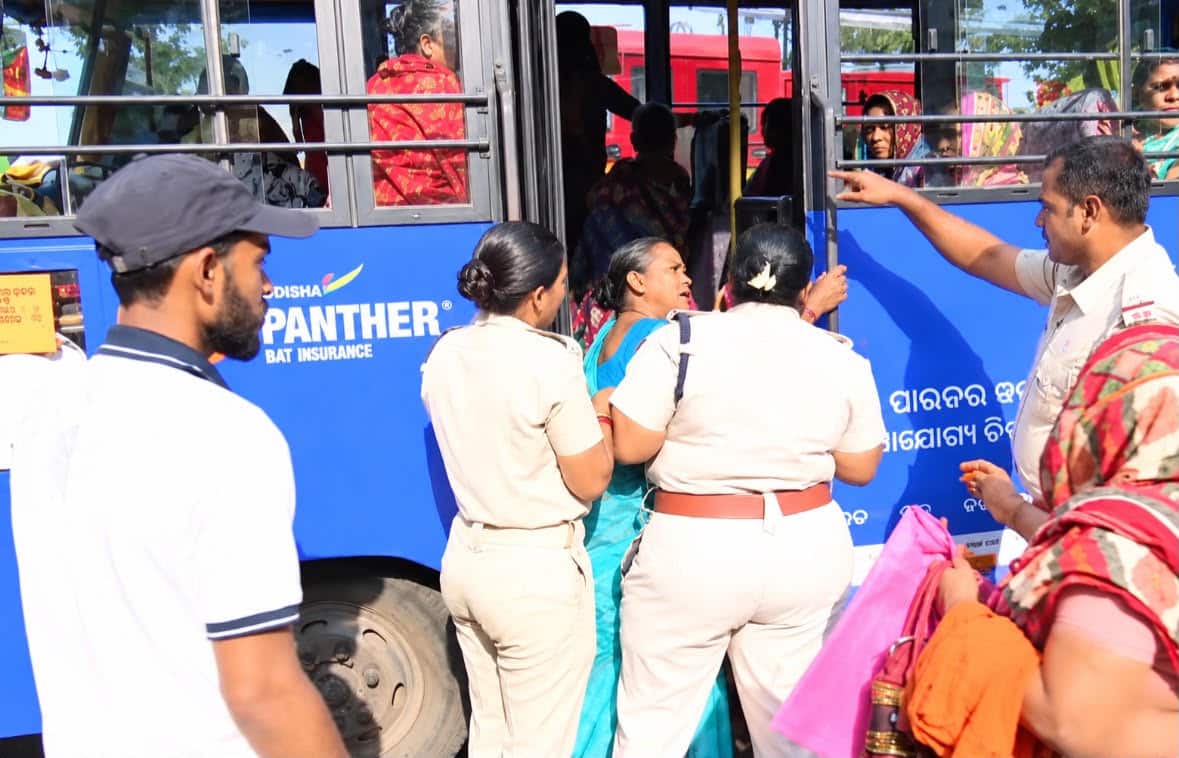
Hundreds of Habisyalis (elderly women observing month-long fasts and rituals) who flocked to the pilgrim city of Puri to earn spiritual merit during the holy month of Kartik are facing severe hardships.
Upon reaching Shreekhetra, many of these elderly devotees have found themselves without a roof over their heads. With the designated Habisyali camps running out of space, numerous women are waiting outside the shelters, forced to spend the cold winter nights on the roadside, battling mosquitoes and dew.
Despite the annual increase in the influx of Habisyalis to Puri, accommodation facilities have shrunk instead of expanding. Three years ago, the administration arranged lodging for approximately 3,000 Habisyalis. This year, the capacity has been reduced to just 2,500. Consequently, many devotees who failed to register are grappling with severe accommodation shortages.
A major hurdle has been the online registration system. Many elderly women, unfamiliar with the digital application process, had to rely on others for assistance. However, the registration quota was filled within a mere 40 minutes, leaving many devoid of a spot. Although the administration has asked unregistered devotees to return home, the women, driven by their deep faith and desire to observe the Kartik vows in the Lord’s abode, are refusing to leave.
Yesterday, several unregistered Habisyalis were temporarily sent to night shelters and a Balashram (orphanage). However, they were asked to vacate the premises the following morning and return to their hometowns, plunging them back into uncertainty. Hoping for administrative intervention, these elderly women continue to wait outside the camps. Many are making heart-wrenching pleas, stating, “Even if you don’t provide us with food, at least give us a small roof over our heads.” This prevailing chaos has sparked widespread resentment against the government’s arrangements.
In the past, Habisyalis could observe their vows affordably by staying in various Mutts (monasteries) and Dharamshalas across Puri. However, following the execution of the Shree Mandir Parikrama (Heritage Corridor) Project, the landscape of many traditional Mutts has changed, leading to a drastic shortage of alternative accommodations. The few remaining Mutts and Dharamshalas are completely packed. As a result, these devotees are neither finding space in government camps nor getting affordable rental rooms.
With elderly women suffering in the pursuit of devotion, demands are growing for the administration to reconsider the accommodation arrangements and provide alternative shelters on humanitarian grounds.