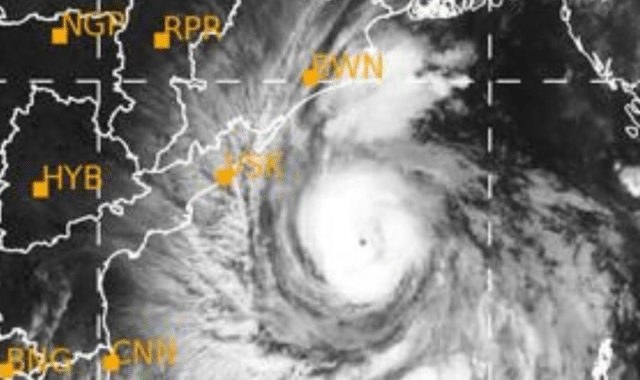
The India Meteorological Department (IMD) has issued a top-priority Red Message (Cyclone Warning) for the coasts of Andhra Pradesh and adjoining south Odisha as Cyclonic Storm “Arnab” (pronounced Ornab) rapidly intensified into a Severe Cyclonic Storm over the Westcentral Bay of Bengal on Monday evening.
As of 17:30 hrs IST on October 26, 2026, the severe storm was centered near latitude 15.6°N and longitude 87.3°E. Moving west-northwestwards at a speed of 17 kmph over the preceding six hours, the cyclone is currently situated:
- 490 km south-southeast of Gopalpur (Odisha)
- 490 km east-southeast of Visakhapatnam (Andhra Pradesh)
- 560 km east-southeast of Kakinada (Andhra Pradesh)
- 660 km east of Machilipatnam (Andhra Pradesh)
- 730 km east of Bapatla (Andhra Pradesh)
- 730 km northwest of Sri Vijaya Puram (Andaman Islands)
Trajectory and Expected Landfall
Meteorologists project that Cyclone Arnab will continue its west-northwestward path while intensifying further into a Very Severe Cyclonic Storm within the next 12 hours over the same region.
The system is forecasted to maintain its west-northwestward movement until the evening of October 27, before re-curving slightly towards the northwest. It is expected to cross the Andhra Pradesh and Yanam coasts between Bapatla and Visakhapatnam—passing close to Yanam—as a Very Severe Cyclonic Storm by the forenoon of October 28, 2026. During landfall, maximum sustained wind speeds are predicted to reach 115–125 kmph, gusting up to 140 kmph.
Alerts and Disaster Preparedness
With the Red Alert activated, coastal authorities in Andhra Pradesh, Puducherry (Yanam), and Odisha have been advised to brace for severe weather conditions. Fishermen have been strictly instructed to return to land and avoid venturing into the central and western Bay of Bengal until landfall operations subside.
Local administrations are mobilizing response units, including National Disaster Response Force (NDRF) and State Disaster Response Force (SDRF) teams, in low-lying coastal areas susceptible to heavy rainfall, coastal inundation, and strong storm surges.
Residents in vulnerable zones are urged to stay informed through official weather bulletins and follow instructions from local authorities.