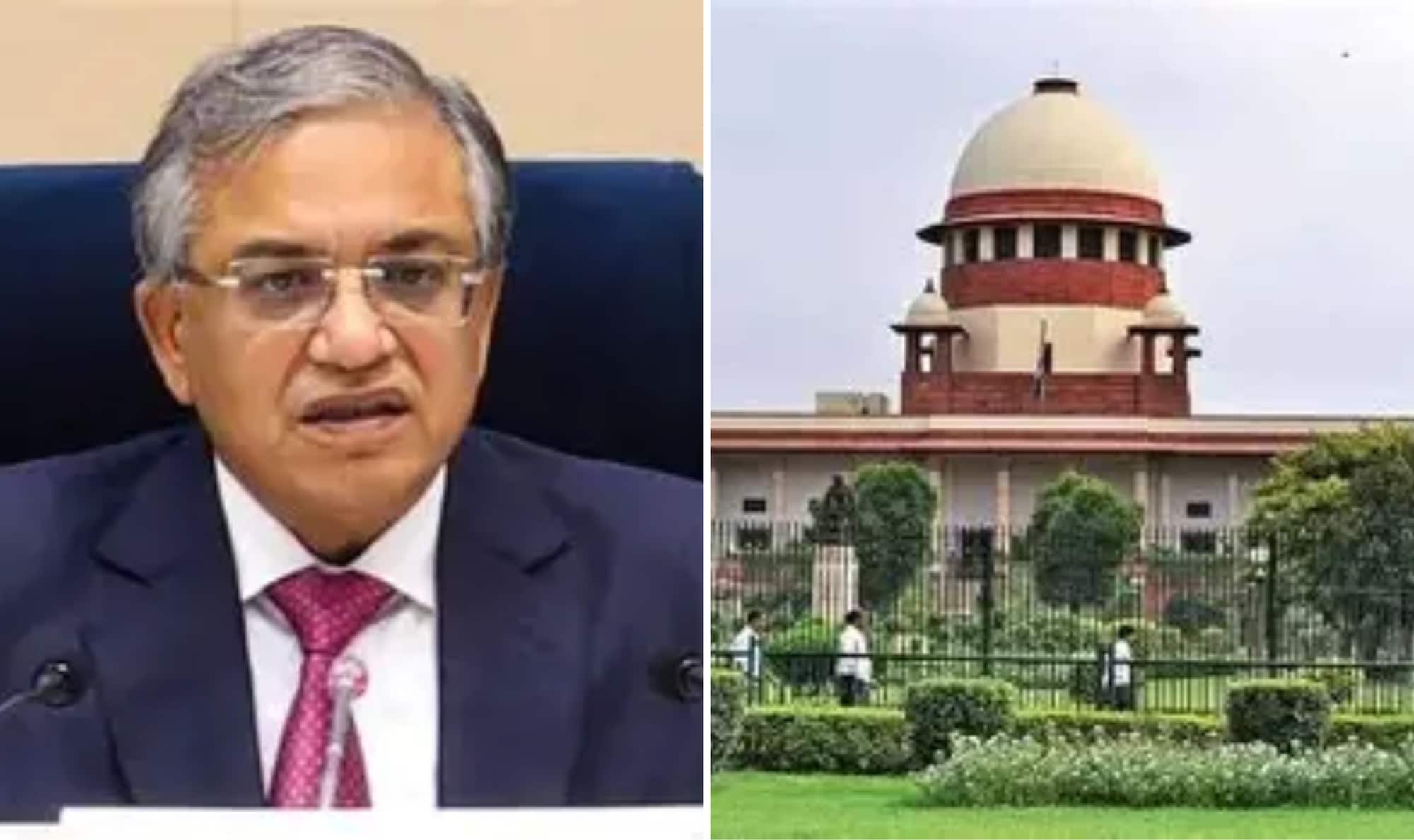
The Supreme Court of India is scheduled to hear a batch of public interest litigations (PILs) on Monday seeking the immediate suspension of Chief Election Commissioner (CEC) Gyanesh Kumar.
The petitions challenge the manner in which the poll body has functioned under his leadership, alleging that critical decisions were taken unilaterally without the concurrence or approval of the two other Election Commissioners.
A three-judge Bench comprising Chief Justice Surya Kant, Justice Joymalya Bagchi, and Justice V. Mohana will hear the petitions filed by Patna resident Rakesh Kumar Singh and Advocate Shailendra Mani Tripathi.
Allegations of Unilateral Decision-Making
The core issue highlighted in the petitions revolves around whether the CEC individually exercised powers that constitutionally and legally belong to the Election Commission of India as a collective multi-member body. The petitioners have urged the top court to declare all such unauthorized actions, statutory guidelines, and software modifications null and void.
According to the plea filed by Rakesh Kumar Singh:
-
Temporary Suspension: The Court should direct that CEC Gyanesh Kumar be restrained from performing his duties pending the final disposal of the matter.
-
Interim Administration: During the suspension period, the business of the Election Commission should be transacted through the unanimous decisions of the remaining two Election Commissioners, Sukhbir Singh Sandhu and Vivek Joshi.
-
Judicial Oversight on Vacancies: Any temporary appointment to fill the resulting vacancy should be made upon the recommendation of a panel that includes the Chief Justice of India.
Internal Objections Brought to Light
The legal challenge follows reports revealing significant internal friction within the Election Commission. Election Commissioners Sukhbir Singh Sandhu and Vivek Joshi reportedly raised formal objections on record at least 14 times over a 10-month period regarding orders and decisions related to the Special Intensive Revision (SIR) of electoral rolls. The commissioners claimed these directives were issued without their prior knowledge, consultation, or recommendation.
Responding to the allegations, the Election Commission clarified that differing views and internal deliberations are standard practice within any multi-member institution, asserting that all issued orders carry full legal sanction and strictly adhere to statutory procedures.
Demand for Criminal Proceedings
In a separate plea filed through Advocate Chand Qureshi, Advocate Shailendra Mani Tripathi argued that the statutory requirement of collective decision-making under the Chief Election Commissioner and Other Election Commissioners Act was systematically bypassed.
The plea goes a step further, requesting criminal proceedings against the CEC and associated officials for breach of official duty. It contends that without statutory or constitutional immunity against criminal prosecution for such breaches, the CEC remains directly accountable under ordinary penal law, subject to police investigation and trial proceedings.
The petitions name the Union Ministry of Law and Justice, the Election Commission of India, CEC Gyanesh Kumar, Commissioners Sukhbir Singh Sandhu and Vivek Joshi, and senior election official Maneesh Garg as parties to the case.