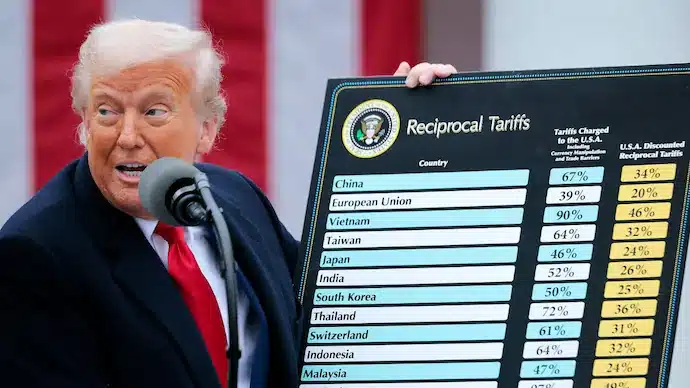
In a landmark ruling, the US Supreme Court has struck down former President Donald Trump’s sweeping global tariffs, declaring the measures illegal under the International Emergency Economic Powers Act (IEEPA).
The 6–3 decision, led by Chief Justice John Roberts, emphasised that tariff authority rests with Congress, not the president.
The tariffs, which generated over $175 billion in revenue, were a cornerstone of Trump’s second-term economic agenda. Their removal not only disrupts US customs receipts but also forces the administration to consider refunding billions collected from importers.
The ruling carries significant global implications. India, one of the first nations targeted by Trump’s “reciprocal” tariffs, faced impacts across pharmaceuticals, textiles, and IT services. The decision eases immediate trade tensions but signals that Washington may explore alternative legal tools to sustain protectionist measures.
Treasury Secretary Scott Bessent hinted at pursuing national security and unfair trade provisions, though none offer the sweeping flexibility of IEEPA. For now, the judgment marks a decisive shift in US trade policy, reaffirming constitutional limits and reshaping global economic relations.