
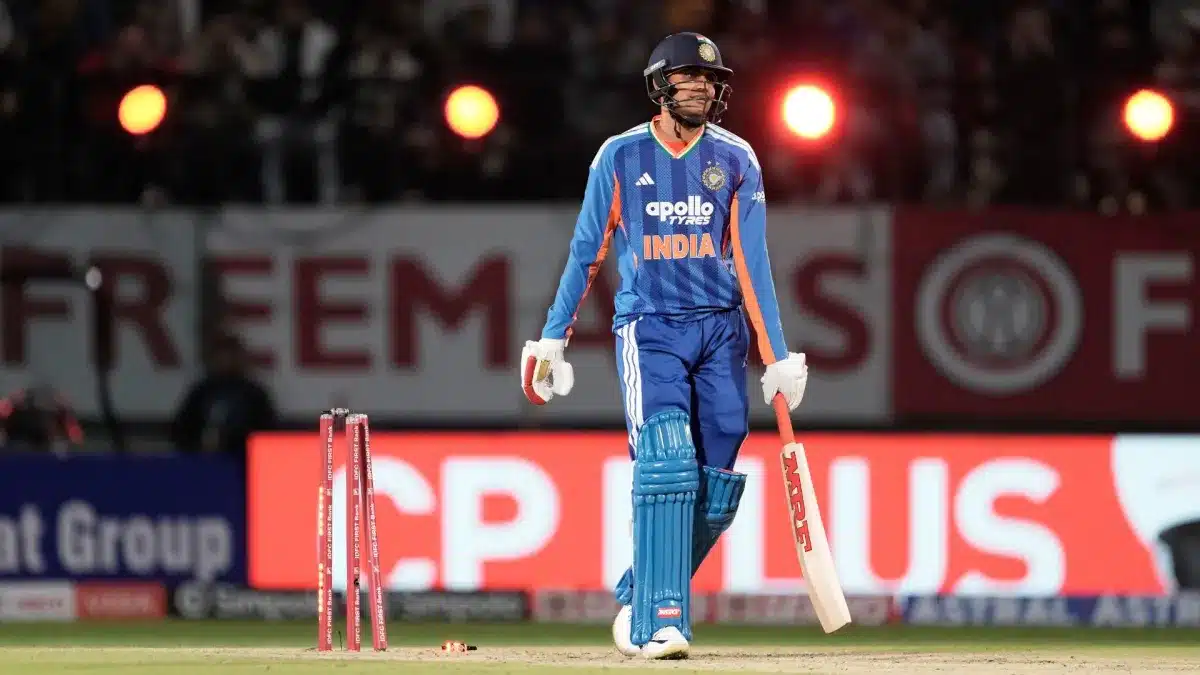
The announcement of India’s T20 World Cup 2026 squad has sparked debate beyond team composition, with Shubman Gill’s omission bringing the spotlight firmly on communication gaps within the selection process.
While the BCCI retained Suryakumar Yadav as captain and named Axar Patel as vice-captain, the exclusion of Gill—who was vice-captain during the recent home T20I series against South Africa—has raised concerns about transparency and player management at the highest level.
According to a report by PTI, Gill’s fate was effectively decided earlier than the official squad announcement. The decision reportedly came on the day the fourth T20I was abandoned due to heavy smog, when the team management and selectors concluded that Gill would not be part of the World Cup plans. However, as per BCCI sources, the batter was not formally informed of this decision until the squad was announced publicly.
Notably, neither head coach Gautam Gambhir nor captain Suryakumar Yadav is believed to have communicated the decision to Gill beforehand. This lack of direct communication has added an uncomfortable layer to what is otherwise a routine selection call in elite sport.
Reports also suggest that Gill was keen to play the Ahmedabad T20I, with his toe injury not considered serious enough to rule him out. Despite this, he was not included in the match, a development now seen as the first clear indication that the team management had begun to move on from him in the shortest format.
Gill’s recent T20I numbers—32 runs in three matches against South Africa—have been modest, and selection decisions at the international level are inevitably performance-driven. However, the issue at hand appears to be less about form and more about how and when the decision was conveyed.
Earlier this month, Gill was entrusted with the vice-captaincy, signaling leadership continuity. Less than three weeks later, his exclusion from the World Cup squad and the reassignment of the vice-captain role to Axar Patel have made the turnaround feel abrupt.
While selection calls in international cricket are often uncompromising, clear and timely communication remains critical to maintaining trust within the dressing room. In a format where roles are defined well in advance, delayed clarity can create uncertainty—something teams aiming for global success generally strive to avoid.