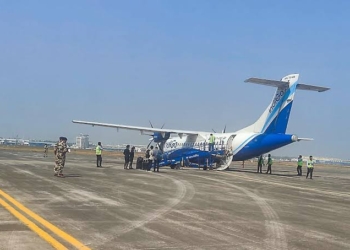

Less than 300 kilometres from the Line of Actual Control (LAC) with China, India has operationalised a strategic Emergency Landing Facility (ELF) on the Dibrugarh–Moran stretch of National Highway 127 in Assam.
The facility was inaugurated by Prime Minister Narendra Modi on Saturday, marking a significant expansion of India’s defence infrastructure in the Northeast.
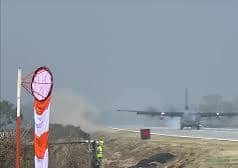
To commemorate the opening, the Prime Minister’s aircraft landed directly on the reinforced highway strip at Moran — a first-of-its-kind event in the region — underscoring the operational readiness of the new facility.
Strategic Location Near China Border
Situated in Upper Assam, the ELF lies within close proximity to the India–China frontier, enhancing India’s rapid response capability in a strategically sensitive region. The project has been developed in coordination with the Indian Air Force and is designed to serve as an alternative runway in case key airbases become unavailable due to operational or emergency circumstances.
The 4.2-kilometre reinforced concrete stretch on National Highway 127 has been engineered to handle fighter aircraft weighing up to 40 tonnes and transport aircraft with a maximum take-off weight of 74 tonnes.
Unlike conventional airbases that may be vulnerable during conflict, highway-based landing strips offer redundancy, flexibility and strategic unpredictability.
Operational Features of the Moran ELF
-
No central divider to allow seamless aircraft movement
-
Fencing installed along both sides for safety
-
Temporary roadside structures cleared
-
Designed for both landing and take-off operations
-
Dual-use capability for military and civilian aircraft
During the inauguration event, a Sukhoi Su-30MKI conducted a take-off demonstration, showcasing the facility’s operational readiness.
Geographic Expansion of India’s Emergency Landing Facilities
The Moran project marks the first Emergency Landing Facility in Northeast India. Previously, such infrastructure was largely concentrated in western, northern and central regions of the country. Its addition significantly strengthens India’s defence posture along the China-facing frontier.
Prime Minister Modi’s aircraft departed New Delhi early morning and arrived in Assam before proceeding to Moran for the scheduled landing. Following the inauguration, he witnessed a 20-minute aerial display involving fighter jets, transport aircraft and helicopters. He later departed from the highway airstrip aboard a C-130 transport aircraft.
Beyond Defence: Disaster Response and Civil Utility
While defence preparedness remains the primary objective, officials highlighted the ELF’s importance in humanitarian assistance and disaster relief (HADR) operations.
Assam and the broader Northeast frequently face floods, landslides and other natural disasters. The activation of a highway runway in Upper Assam will enable faster deployment of rescue teams, medical aid and evacuation aircraft during emergencies, ensuring inclusive and timely support for affected communities.
Union Minister Jyotiraditya Scindia described the integration of road and aviation infrastructure as a reflection of India’s strategic resolve and infrastructure innovation.
Strengthening India’s Strategic Infrastructure
The Moran Emergency Landing Facility represents a significant milestone in India’s infrastructure modernisation efforts. By combining highway engineering with aviation capability, the project enhances operational flexibility, strengthens national security and improves disaster response mechanisms in the Northeast.
The initiative reflects a broader push toward integrated, resilient and future-ready infrastructure development across the country.