
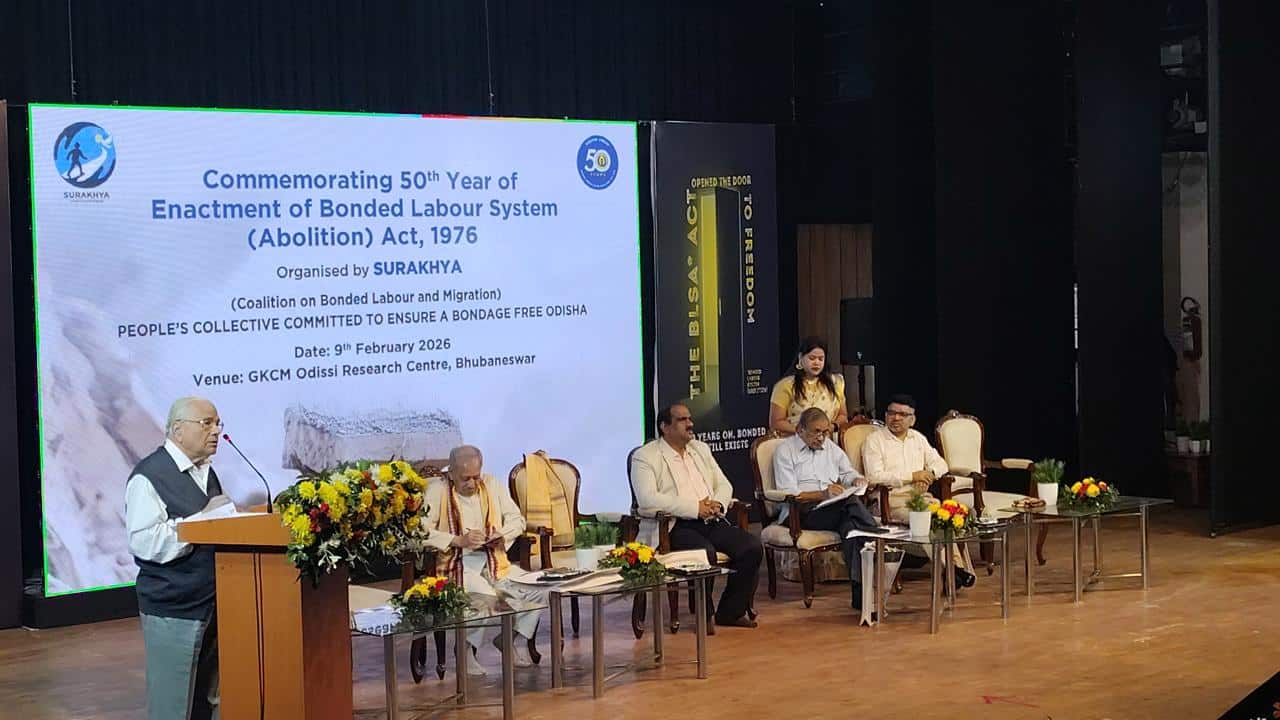
As India commemorates the 50th anniversary of the Bonded Labour System (Abolition) Act, 1976, a multi-stakeholder consultation in Odisha has highlighted the persistent scourge of bonded labour, urging the state government to adopt a dedicated State Action Plan (SAP), standardised operating procedures (SOPs), and revive vigilance committees.
Organised by SURAKHYA, a coalition dedicated to eradicating bonded labour, the event on Monday gathered former bureaucrats, civil society groups, survivor collectives, journalists, and advisory members. Participants emphasised that the milestone is not celebratory but a moment for reflection on enforcement gaps that allow exploitation to thrive.
Despite the law abolishing bonded debt and criminalising the practice, bonded labour endures in sectors like brick kilns, construction, agriculture, stone quarries, and informal industries. Migrant workers from western Odisha, often driven by distress, face heightened vulnerability through informal arrangements.
Former Union Labour Secretary Lakshmidhar Mishra noted that bonded labour has evolved into subtler forms, undermined by weak enforcement, poor inter-departmental coordination, and inactive district-level vigilance committees. Retired IAS officer Aurobindo Behera added that low reported cases reflect failures in identification and acknowledgement, not eradication.
Survivors’ testimonies were poignant. Ranjita Rana from Shrama Vahini shared stories of delayed wages, abuse, restricted movement, and denial of basics like water and healthcare. Workers are lured with advances, forced into gruelling hours, and intimidated from seeking help, making civil society rescues vital.
However, rescue is insufficient without robust rehabilitation. Delays in release certificates and inadequate support often trap freed workers in cycles of exploitation. SURAKHYA convenor Amiya Bhushan Biswal called post-rescue processes the system’s weakest link.
Data reveals the crisis: In 2023-24, 155 bonded labourers were rescued in Odisha, per parliamentary records. Over nine years, 403 migrant workers from the state died elsewhere, with Ganjam, Kalahandi, and Bolangir hardest hit. Though 11 districts are flagged as vulnerable and a task force exists, SOPs and SAP clarity are absent.
SURAKHYA submitted recommendations, including timely rehabilitation aid, active committees, and a data portal for tracking. The consultation ended with a plea for convergence among labour, revenue, police, and Panchayati Raj departments to fulfil the Act’s intent.