
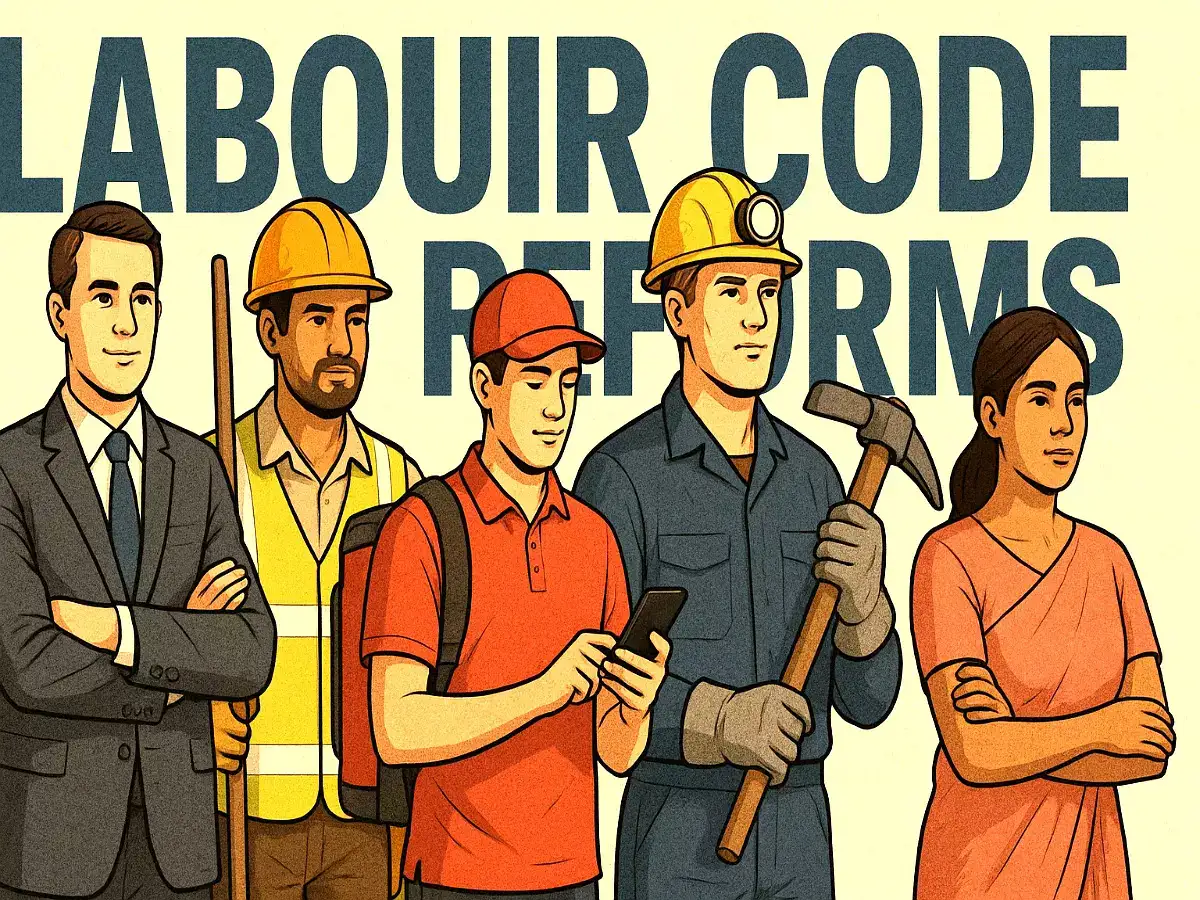
India’s four new Labour Codes came into effect on Friday, replacing 29 existing labour laws and marking one of the most sweeping reforms to India’s labour governance framework. The new rules aim to improve wages, expand social security, strengthen workplace safety, and simplify compliance for employers.
Four codes under a unified labour framework
The reforms combine key labour rules into four consolidated codes:
-
Code of Wages (2019)
-
Industrial Relations Code (2020)
-
Code on Social Security (2020)
-
Occupational Safety, Health and Working Conditions Code (2020)
Together, they create a modernised, uniform system for wage regulation, industrial relations, social protection, and safety standards across sectors.
PM Modi calls reforms “most progressive since Independence”
Prime Minister Narendra Modi welcomed the rollout, saying the reforms will strengthen the rights of all workers—formal, informal and gig.
“These reforms ensure better wages, safety and dignity for our workforce. A major stride towards Viksit Bharat,” he said in a message using the phrase “Shramev Jayate.”
Union Labour Minister Mansukh Mandaviya praised the changes, highlighting guarantees for minimum wages, equal pay for women, appointment letters, and comprehensive social security for nearly 40 crore workers.
Key worker benefits under the new Labour Codes
The government says the reforms will:
-
Ensure timely minimum wages for all categories of workers
-
Mandate appointment letters for every employee
-
Guarantee equal pay and workplace dignity for women
-
Provide social security coverage to gig, platform, and informal workers
-
Enable gratuity after one year for fixed-term employees (earlier 5 years)
-
Offer free annual health check-ups for workers aged 40+
-
Enforce double wages for overtime
-
Provide 100% health protection for hazardous-sector workers
-
Strengthen compliance standards through international best practices
The minister called the rollout a foundational step towards building a self-reliant and developed India by 2047.
What the New Labour Codes Mean for Different Sectors
1. Fixed-Term Employees (FTE)
-
Full benefits equivalent to permanent workers
-
Gratuity after one year of service
-
Equal wages and safer hiring practices
-
Reduced dependence on contract labour
2. Gig & Platform Workers
-
First-time legal definitions for gig and platform work
-
Aggregators to contribute 1–2% of annual turnover (capped at 5% of worker payouts) to a social security fund
-
Aadhaar-linked Universal Account Number for portable benefits
3. Contract Workers
-
Improved employability through FTE adoption
-
Health and social security benefits ensured by the principal employer
-
Free annual health checks
4. Women Workers
-
Ban on gender discrimination
-
Equal pay for equal work
-
Permission for night shifts with safety measures
-
Mandatory representation in internal grievance committees
-
Inclusion of parents-in-law as dependents for benefits
5. Youth Workers
-
Guaranteed minimum wages
-
Mandatory appointment letters
-
Paid leave entitlement
-
Wages linked to the National Floor Wage
6. MSME Workers
-
Social security coverage
-
Standard work hours and double overtime
-
Paid leave and timely wage payments
-
Access to basic facilities like canteens and rest areas
7. IT & ITES Workforce
-
Salary release by the 7th of every month
-
Equal pay and increased leadership opportunities for women
-
Night shift permissions with safeguards
-
Quick dispute resolution for wage and workplace issues
-
Mandatory appointment letters and social security inclusion
8. Cross-Sector Reforms
-
National Floor Wage applicable to all
-
Gender-neutral job opportunities, including for transgender persons
-
Inspector-cum-Facilitator system for guidance-based compliance
-
Faster dispute resolution through Industrial Tribunals
-
One registration, one licence, one return across codes
-
National OSH (Occupational Safety and Health) Board for unified safety standards
-
Mandatory safety committees for units employing 500+ workers
-
Updated thresholds for factory applicability to ease MSME compliance