
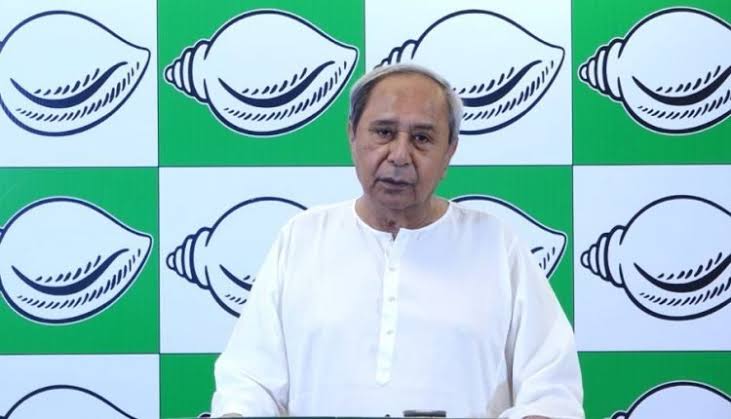
In a scathing critique of the Union Budget 2026 presented by the central government, former Odisha Chief Minister and Leader of Opposition Naveen Patnaik expressed deep disappointment, accusing the budget of offering “no noteworthy benefits” to Odisha and its residents.
The BJD Supremo highlighted what he described as a pattern of neglect under the “double engine government,” referring to the BJP-led administrations at both the centre and state levels.
I express my disappointment on the #Budget2026 presented today by the Union Government. The budget has offered no noteworthy benefits to #Odisha and its people.
The anticipation from the people of Odisha was that the double engine government would offer a growth momentum with…
— Naveen Patnaik (@Naveen_Odisha) February 1, 2026
Patnaik’s statement, released on X, underscored the high expectations from Odisha’s people for boosted infrastructure, job creation, and fair resource allocation. “The anticipation from the people of Odisha was that the double engine government would offer a growth momentum with focus on infrastructure, job creation and additional allocation, which is due to the state,” he said. However, he lamented that “the state has received very little,” painting a picture of unfulfilled promises and uneven development.
While welcoming the proposal to establish a Rare Earth Corridor in Odisha – acknowledging the state’s role as a leading producer of key minerals and its contribution to national growth – Patnaik criticised other aspects of the budget as superficial or repetitive. He pointed to the National Waterways announcement to connect mineral-rich areas and industrial centres to ports, calling it “a decade-old proposal without any progress on the ground.” This, he argued, exemplifies how Odisha’s resources are prioritised for extraction while tangible benefits remain elusive.
A major point of contention was the exclusion of Odisha from the seven new High-Speed Rail corridors announced as “growth connectors.” Patnaik linked this to the BJP’s earlier decision to halt the Bhubaneswar Metro project, stating, “Odisha BJP nipped the #BhubaneswarMetro project earlier and the neglect of people’s needs continues as usual.” He expressed frustration over the lack of momentum in urban infrastructure, which he believes is crucial for economic upliftment and employment opportunities in the state.
Adding to the grievances, Patnaik called it “quite baffling” that the tourism-centric Scheme for Development of Buddhist Circuits overlooked Odisha, despite the presence of significant sites like the Diamond Triangle (comprising Ratnagiri, Udayagiri, and Lalitgiri). This omission, he suggested, further marginalises Odisha’s cultural heritage and potential for tourism-driven revenue.
In his broader assessment, Patnaik framed the budget as one that exploits Odisha’s natural wealth without reciprocal investment: “As seen from the entirety of the Union Budget, Odisha is getting allocations only for taking its natural resources away and completely ignored when it comes to resource allocation for benefit of people of the State.” He urged the state BJP government to take responsibility and advocate for Odisha’s “rightful dues” from the center, emphasizing that “Odisha and its people deserve more and better from the Union Budget.”
Patnaik’s remarks come amid growing regional discontent in Odisha, where critics argue that the state, rich in minerals like bauxite, chromite, and iron ore, has not seen proportional returns in federal funding. Supporters of the BJD echoed his sentiments online, highlighting issues like job shortages and the outflow of profits to outsiders. The central government has yet to respond directly to these criticisms, but Finance Ministry officials have defended the budget as balanced and growth-oriented for the nation as a whole.
As Odisha grapples with these budgetary shortfalls, Patnaik’s voice as opposition leader could amplify calls for equitable federalism, potentially influencing upcoming political discourse in the state assembly.