
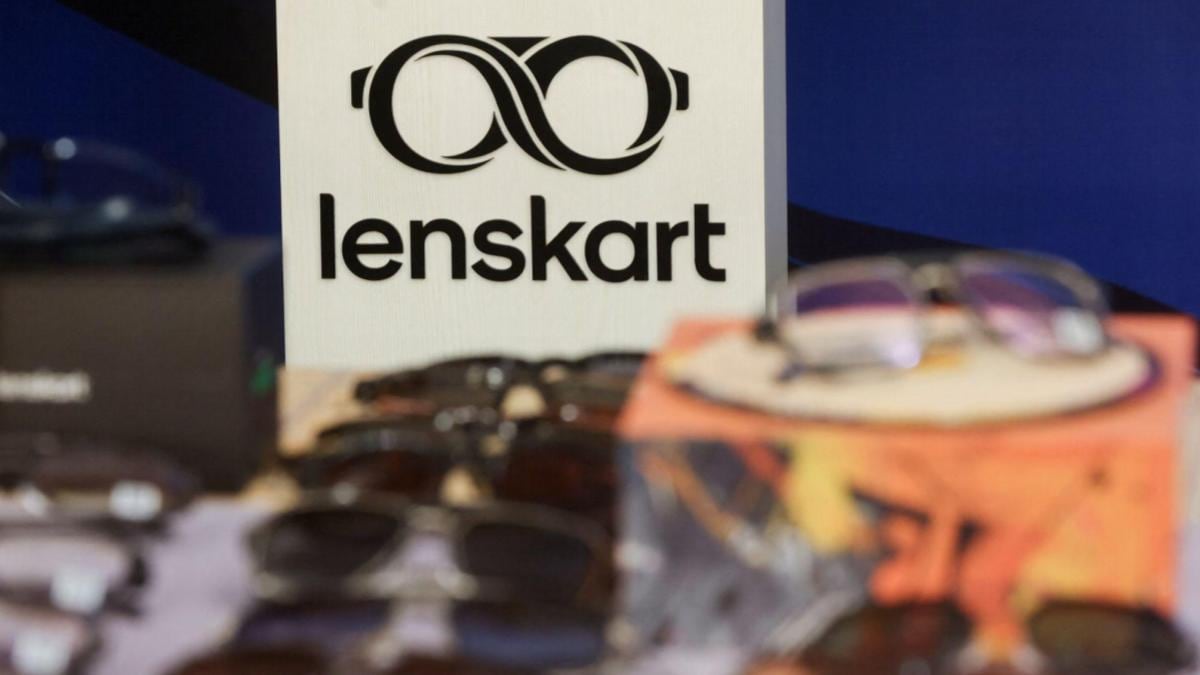
The much-awaited Lenskart IPO listing is set for today, but excitement in the grey market has cooled sharply. The grey market premium (GMP) for Lenskart Solutions Ltd. dropped to just ₹10 above the IPO price of ₹402, signaling only a 2.49% listing gain—a steep fall from the 25% premium seen before the issue opened.
Despite the subdued sentiment, co-founder and CEO Peyush Bansal, known for his role on Shark Tank India, said Lenskart’s mission was never driven by valuations.
“We didn’t build Lenskart to reach a valuation. We built it to reach people,” Bansal said in a statement ahead of the listing.
Grey Market Premium Falls Sharply
The Lenskart GMP declined for three consecutive days following the share allotment on November 6. Market observers said this decline reflects traders’ growing caution and ongoing concerns about the company’s “stretched valuations.”
Experts also noted that GMP is merely an indicator of market sentiment—not a guarantee of listing-day performance. It represents what traders are willing to pay in the unofficial market for shares before listing.
IPO Subscription and Valuation
Lenskart’s three-day IPO closed on a strong note earlier this month, drawing 28.27 times subscription overall. The Qualified Institutional Buyers (QIB) segment saw demand of over 40 times, while the retail investor portion was subscribed 7.56 times.
Still, analysts highlighted Lenskart’s price-to-earnings ratio of 238:1, meaning investors are paying ₹238 for every ₹1 earned. That figure, they say, signals steep expectations from the eyewear brand.
Analyst Opinions Split
Brokerage Ambit Capital recently issued a “sell” rating, setting a target price of ₹337, roughly 16% below the IPO price. The firm described Lenskart’s valuation as “stretched”, comparing it unfavorably with peers such as Nykaa, Trent, and Titan’s eyewear division.
However, DSP Asset Managers Pvt. Ltd., one of the institutional investors, defended its position, calling Lenskart a “strong and scalable business”—while acknowledging that the IPO pricing is expensive.
Following the IPO, Lenskart’s market capitalization stands at roughly ₹7,000 crore, surpassing several established consumer brands.
Inside Lenskart’s Business Model
Lenskart’s made-to-order manufacturing and aggressive expansion strategy have built a robust market presence but come with heavy capital costs. Analysts caution that capital expenditure may continue to impact free cash flow until FY28.
Still, the company’s dominant market share and growing international footprint make it well-positioned for long-term growth in a largely under-penetrated eyewear market.
Peyush Bansal’s Vision
In a heartfelt LinkedIn post, Bansal reflected on Lenskart’s 15-year journey:
“Fifteen years ago, I didn’t dream of ringing a bell. I just wanted to solve one human problem — that millions of people in India couldn’t see clearly. Tomorrow, Lenskart will ring the bell. To me, it doesn’t feel like an ending — it feels like day zero.”
Bansal’s message resonates with investors and consumers alike: Lenskart’s story is about accessibility and vision — both literal and metaphorical.