
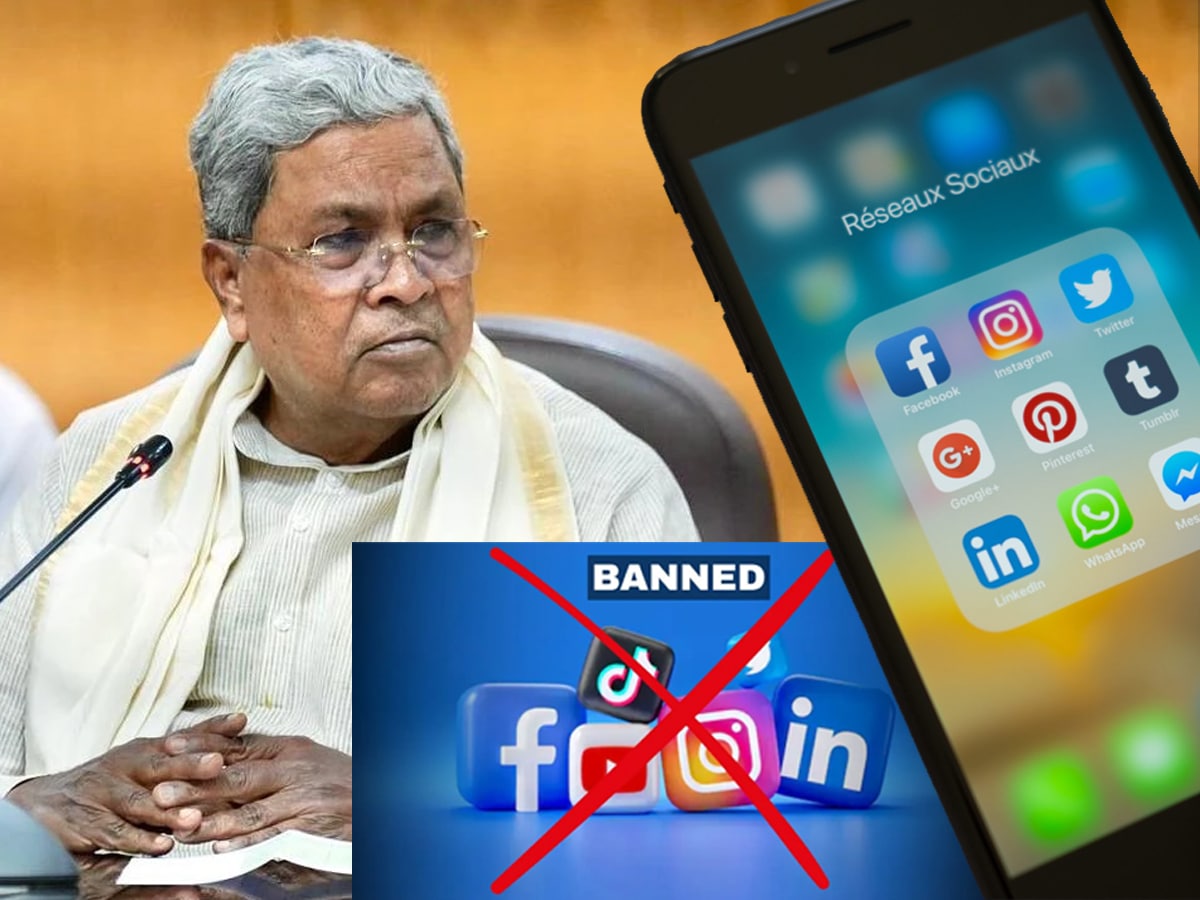
Siddaramaiah, Chief Minister of Karnataka, has announced that the state government plans to ban social media access for children under the age of 16.
The announcement came during the presentation of the ₹4.48 lakh crore state budget for the financial year 2026–27. The proposal aims to address growing concerns about the impact of excessive mobile phone and social media use on young people.
If implemented, Karnataka would become the first state in India to introduce such restrictions.
Focus on Children’s Mental Health and Safety
According to Siddaramaiah, the measure is intended to protect children from potential risks linked to excessive digital use.
Experts and policymakers worldwide have raised concerns about the effects of social media on young people’s mental health, sleep patterns, and online safety.
Several countries have already explored similar measures. For instance, Australia recently introduced restrictions on social media access for users under 16.
AI-Based Learning System for Students
Alongside regulatory measures, the state government plans to expand technology-driven learning initiatives.
Siddaramaiah announced a personalised digital tutoring system that will be developed in collaboration with Indian Institute of Technology Dharwad.
The Artificial Intelligence-based programme will support students from Classes 8 to 12 and is expected to benefit around 1.22 million students. The project will initially be implemented at an estimated cost of ₹5 crore.
Education and Institutional Development
The budget also includes significant investments in higher education and public schools.
The University Visvesvaraya College of Engineering in Bengaluru will receive ₹500 crore for development with the goal of strengthening the institution along the lines of the IIT system.
Additionally, the government has authorised the recruitment of 2,000 teaching staff for degree colleges, engineering colleges, and polytechnics.
The state also plans to recruit 15,000 teachers for primary and secondary schools while expanding the Karnataka Public Schools network to 800 institutions over the next three years.
New Measures for Inclusion and Welfare
The government announced plans to introduce the Rohith Vemula Bill, which aims to address caste-based discrimination in higher education institutions.
Other measures include 90 days of maternity leave for female guest lecturers in government colleges, marking a first for the state.
Economic Outlook and Infrastructure Plans
Siddaramaiah said Karnataka’s economy has been growing faster than the national average.
The state recorded 8.1% Gross State Domestic Product growth in 2025–26 compared with the national growth rate of 7.4%.
The budget also outlines plans to expand the metro network in Bengaluru by 41 kilometres, which could benefit nearly 1.5 million residents.
In addition, the government plans to introduce home-based palliative care services in partnership with Pallium India to support patients with severe and chronic illnesses.