
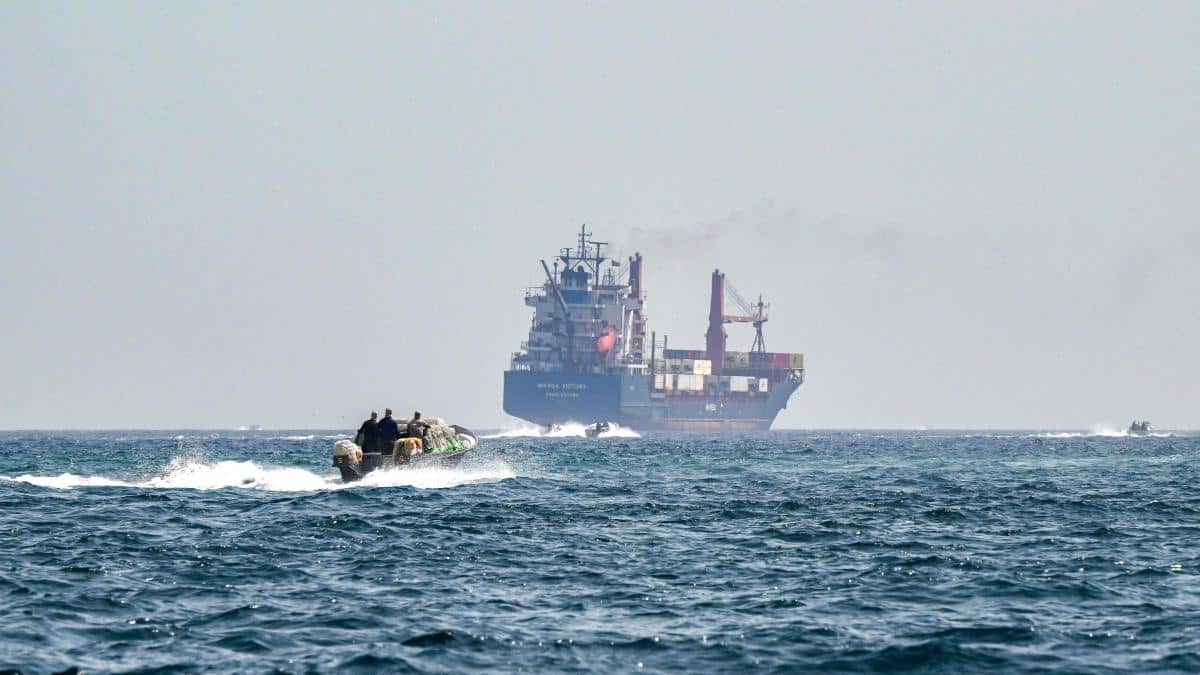
In a significant development amid the ongoing West Asia conflict, Iran has turned back a Karachi-bound cargo vessel at the strategically critical Strait of Hormuz, citing non-compliance with maritime regulations.
The vessel, identified as SELEN and registered under Saint Kitts and Nevis, was reportedly denied passage due to a lack of prior authorization from Iran’s naval authorities. The ship was en route to Karachi when it was ordered to reverse course.
Iran Tightens Maritime Control
According to Rear Admiral Alireza Tangsiri, commander of the Islamic Revolutionary Guard Corps (IRGC) Navy, all vessels must secure clearance before transiting through the vital shipping corridor.
He stated that strict enforcement of maritime protocols is essential for maintaining regional security. The Strait of Hormuz remains one of the world’s most crucial oil transit routes, handling a significant portion of global energy shipments.
The ship is currently believed to be stationed near Sharjah Anchorage in the United Arab Emirates, based on maritime tracking data.
Strategic Importance of the Strait
The Strait of Hormuz connects the Persian Gulf with the Gulf of Oman and is a critical artery for global oil and gas supplies. Any disruption in this passage has immediate implications for international markets, including fuel prices and supply chains.
Since the escalation of hostilities involving the United States, Iran, and regional actors, Tehran has imposed stricter controls over vessels passing through the strait. Reports indicate that only “non-hostile” ships with prior approval are being allowed safe passage.
Pakistan’s Mediation Effort Sees Limited Response
Meanwhile, Pakistan has stepped forward with an offer to mediate peace talks between Washington and Tehran.
Prime Minister Shehbaz Sharif announced that Pakistan is willing to host negotiations aimed at resolving the conflict and restoring stability in the region.
However, Iran’s latest action suggests that diplomatic overtures have not yet translated into operational flexibility on the ground.
Conflicting Signals on Peace Talks
The situation remains complex, with mixed signals emerging from both sides. While former US President Donald Trump has indicated progress in talks, Iranian officials have denied any formal negotiations, calling such claims misleading.
Despite ongoing back-channel communications through intermediaries, trust deficits continue to hinder meaningful dialogue.
Global Implications
The continued restrictions in the Strait of Hormuz highlight the broader risks posed by the conflict. Disruptions in maritime trade could impact global energy security, increase shipping costs, and create volatility in international markets.
As diplomatic efforts continue, the international community remains closely watchful of developments in this key geopolitical flashpoint.