
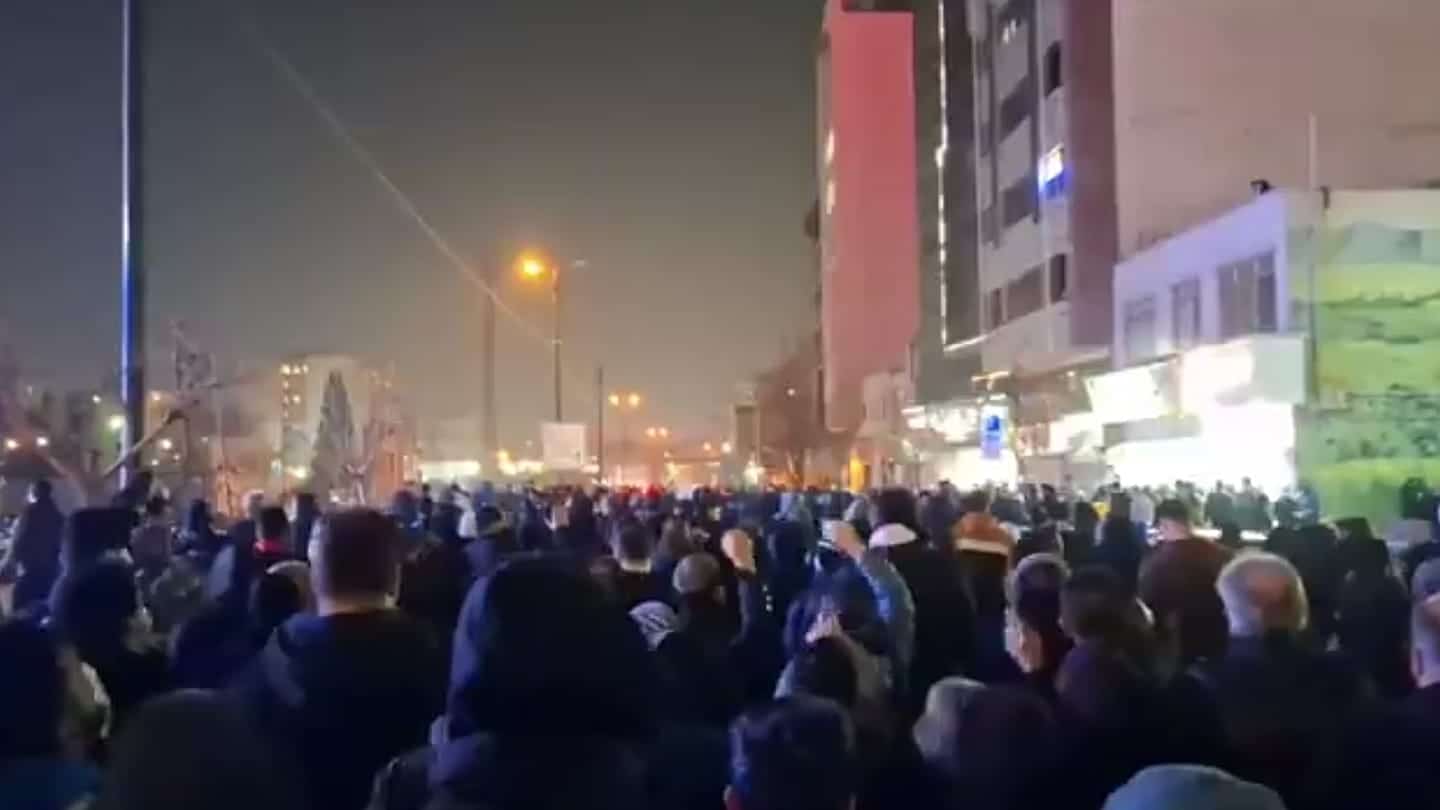
Iran’s government has signaled a sharper crackdown on nationwide protests, warning demonstrators of severe consequences, including the death penalty, as unrest continues to spread across the country. Reports indicate that at least 116 people have been killed and more than 2,600 detained since the protests began late last month.
Two weeks into one of the largest protest movements in recent years, authorities under the leadership of Supreme Leader Ayatollah Ali Khamenei have issued strong warnings to those participating in demonstrations driven by economic hardship, currency depreciation, and rising living costs.
Iran’s Attorney General, Mohammad Movahedi Azad, stated that individuals involved in the protests would be treated as “enemies of God,” a charge that carries the death penalty under Islamic law, according to a Bloomberg report. The warning applies to both active protesters and those detained during the unrest.
Assessing the situation on the ground has been difficult due to a widespread internet blackout, now in its third day, which has cut off most access to international communication platforms. Despite these restrictions, the Associated Press cited a US-based human rights organisation reporting at least 116 fatalities since demonstrations erupted on December 28.
Protests Spread Across Cities
The protests have expanded beyond Tehran to several provinces, including Chaharmahal and Bakhtiari, Ilam, Kermanshah, and Fars, with additional deaths reported in the capital. Initial demonstrations reportedly began in response to Iran’s worsening economic conditions before evolving into broader political dissent.
International Reaction
US President Donald Trump commented on the situation, stating that the United States was “ready to help” as Iranians seek greater freedom. His remarks came after Ayatollah Khamenei accused Trump of being responsible for Iranian bloodshed. Trump had earlier suggested that Iran’s supreme leader could be considering fleeing the country.
Internet Blackout Continues
Iran’s ongoing internet shutdown has made it difficult for residents to contact family members and for the international community to verify developments. While state-run and semi-official media continue to operate, independent reporting remains severely restricted.
Why the Protests Intensified
The demonstrations gained momentum following a call by Reza Pahlavi, Iran’s exiled crown prince, urging citizens to occupy and hold key public spaces. In a recent video message, Pahlavi said the movement’s goal had shifted from street protests to sustaining control over city centres.
Authorities have not released official casualty figures, and human rights groups warn that the toll may rise as security operations intensify.