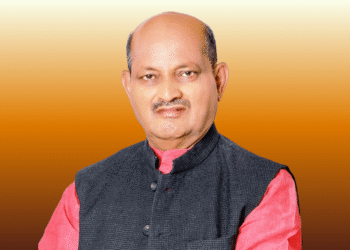
India’s Commerce and Industry Minister Piyush Goyal has said that the long-discussed India–US trade agreement is moving towards closure, signalling a positive shift in bilateral economic relations.
Speaking in an exclusive interview with Hindustan Times, the minister also shared insights into India’s recent Free Trade Agreement (FTA) with the European Union, ongoing talks with Canada, and the broader philosophy guiding India’s trade negotiations under the Modi government.
India–US Trade Talks: ‘Moving Towards Closure’
Describing the proposed deal as “positive” and mutually beneficial, Goyal said that negotiations with the United States are actively progressing, though without rigid deadlines.
“We never do any deal with a deadline in mind. When both sides are satisfied, the date will be announced,” he said.
Goyal added that most contentious issues have already been resolved, allowing both countries to move closer to finalising the agreement.
India and the US resumed talks after a setback in August last year, when former US President Donald Trump imposed a 50% tariff on Indian goods, partly as a penalty for India’s oil purchases from Russia. Since then, negotiations have continued quietly, alongside visible diplomatic signals of renewed engagement.
Canada Trade Deal: ‘They Are Very Keen’
On a potential trade agreement with Canada, Goyal said discussions are in the early stages, but Ottawa has shown strong interest in accelerating talks.
With Canadian Prime Minister Mark Carney expected to visit India in March, Goyal confirmed that both sides are working on defining the framework for negotiations, though the agreement would begin from scratch.
UK and EU Deals Not One-Size-Fits-All
While India’s recently concluded FTAs with the United Kingdom and the European Union have been widely praised, Goyal cautioned against treating them as universal templates.
“Each country’s economic size, conditions, and interests are different. Every trade agreement stands on its own,” he said.
India–EU FTA: Next Steps and Ratification
Addressing the progress of the India–EU trade deal, Goyal rejected suggestions that Europe became more flexible only after global trade disruptions caused by US tariffs.
He said the EU had been consistent in its commitment since negotiations began in 2022, despite temporary slowdowns during election periods in India and Europe.
Goyal expressed confidence that EU Parliament ratification will be completed in 2026, citing strong political backing from major member states, including Germany.
A Shift in India’s Negotiating Strategy
Reflecting on India’s evolving global standing, Goyal highlighted a clear departure from past approaches.
“One of the biggest differences between the past and today is that India is a respected country,” he said, pointing to political stability, macroeconomic strength, and decisive leadership.
He explained that India now negotiates trade agreements based on its future economic potential, rather than current size.
“Today’s $4 trillion economy is not material. We are negotiating India’s $30 trillion economy of 2047,” Goyal said.
This forward-looking approach, he added, allows India to negotiate from a position of strength and secure more favourable deals.
Manufacturing Boost and Quality Focus
Goyal said the India–EU FTA would significantly boost domestic manufacturing, especially in labour-intensive sectors.
-
Out of $35 billion in labour-intensive exports, $33.5 billion received zero-duty access from day one
-
India now competes on equal footing with countries like Bangladesh, which previously enjoyed duty-free access as a Least Developed Country
He stressed that rising demand would naturally improve product quality, reinforcing the government’s long-standing focus on manufacturing excellence.
“If we can export $7 billion, we can export $70 billion,” he said.
The minister reaffirmed the government’s commitment to manufacturing, services, innovation, R&D, startups, and logistics, along with deeper trade engagement with aligned global partners.