
Prime Minister Narendra Modi on Sunday said that forces which once opposed the reconstruction of the Somnath Temple continue to exist even today, operating through what he described as “other malicious means” rather than open violence.
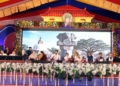
Addressing the Somnath Swabhiman Parv at Prabhas Patan in Gujarat, held to mark 1,000 years since Mahmud of Ghazni’s invasion of the Somnath Temple in 1026, the Prime Minister said repeated attacks on the temple over centuries could not be explained merely as acts of economic plunder.
“If the attacks on Somnath were only about wealth, they would have ended after the first invasion,” Modi said. “But the temple was targeted repeatedly, its idols were broken, and its structure altered again and again. Yet we were taught that it was only about loot.”
The Prime Minister said that after Independence, certain historians and political leaders attempted to downplay or whitewash invasions, presenting them as routine acts of plunder. According to him, this weakened the nation’s collective memory and distanced future generations from the sacrifices made to protect centres of faith.
Modi emphasised that the Somnath Swabhiman Parv was not a commemoration of destruction but a celebration of continuity and resilience. “This is a festival of India’s existence, pride, and an uninterrupted civilisational journey,” he said while addressing saints, priests, elected representatives, and devotees on the concluding day of the four-day event.
Highlighting the history of repeated destruction and reconstruction, the Prime Minister said, “The story of Somnath is not one of defeat, but of victory and renewal. Invaders came again and again, but Somnath was rebuilt in every era.”
Recalling the post-Independence reconstruction of the temple, Modi said Sardar Vallabhbhai Patel’s resolve to rebuild Somnath faced resistance, including objections to then President Rajendra Prasad attending the temple’s inauguration in 1951. He credited Jam Saheb Digvijaysinhji of Nawanagar, the then ruler of Saurashtra, for supporting the reconstruction and serving as the first chairman of the Somnath Temple Trust.
The Prime Minister noted that the year 2026 marks 75 years of the temple’s restoration, calling it a milestone of national self-respect.
He also outlined development initiatives in the Somnath region, including the establishment of Somnath Sanskrit University, expansion of Keshod airport, the Ahmedabad–Veraval Vande Bharat Express, and the creation of a pilgrimage circuit to improve connectivity for devotees.
“Today’s India remembers its faith while strengthening it through infrastructure, connectivity, and technology,” Modi said. He linked cultural confidence with economic ambition, stating that India is moving towards becoming the world’s third-largest economy.
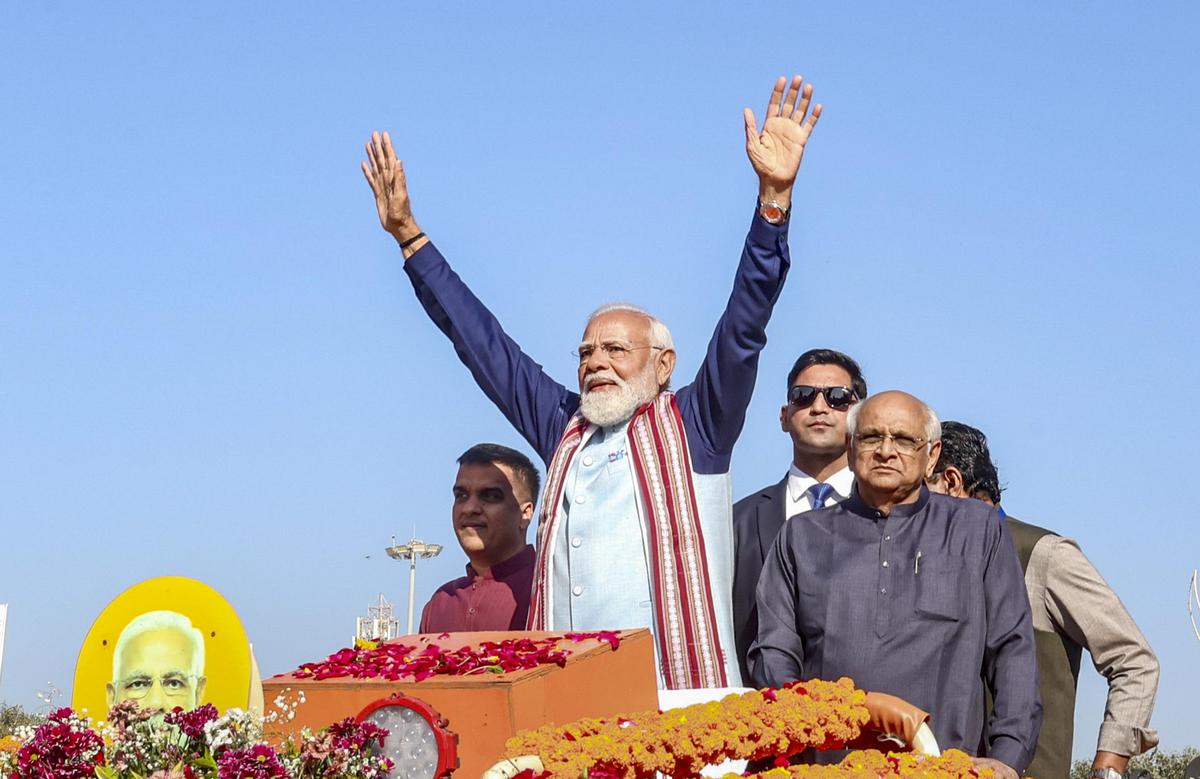
Gujarat Chief Minister Bhupendra Patel, senior ministers, and other dignitaries were present at the event. Earlier in the day, the Prime Minister participated in the Shaurya Yatra, accompanied by state leaders, as part of the Somnath Swabhiman Parv celebrations.