
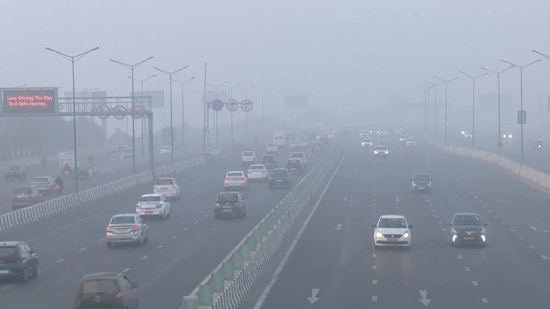
Stricter anti-pollution measures announced by the Delhi government came into force on Thursday after the city’s air quality index (AQI) slipped into the ‘severe’ category earlier this week.
The fresh restrictions aim to reduce emissions and public exposure to hazardous air, and come in addition to the Stage 4 measures under the Graded Response Action Plan (GRAP-4) enforced by the Commission for Air Quality Management (CAQM).
Delhi recorded ‘severe’ air quality levels for three consecutive days beginning December 13, prompting authorities to intensify controls. On Wednesday, the Supreme Court also expressed concern over the effectiveness of existing measures and urged CAQM to adopt a more comprehensive strategy to tackle the pollution crisis.
What are the new anti-pollution measures in Delhi?
Hybrid work-from-home model for offices:
Delhi Labour Minister Kapil Mishra announced that all government and private offices operating within the National Capital Territory must shift to a hybrid work model from Thursday. Under this directive, no more than 50% of employees are allowed to work from office premises, while the remaining staff must work from home.
The order includes exemptions for emergency and frontline workers, such as those in healthcare services, fire services, pollution-control departments, transport, sanitation and other essential services. Daily-wage workers are also excluded from the mandate.
Vehicle entry restrictions:
Delhi Environment Minister Manjinder Singh Sirsa stated that vehicles registered outside Delhi and not compliant with Bharat Stage VI (BS-VI) emission norms will not be permitted to enter the city when GRAP Stages 3 and 4 are in effect. The restriction applies strictly during GRAP-4 enforcement.
To ensure compliance, enforcement teams from the Delhi Traffic Police and transport department have been deployed at city borders and fuel stations. The Supreme Court has also lifted earlier protection from coercive action for BS-III and older vehicles in the national capital.
Additionally, trucks carrying construction materials have been barred from entering Delhi during this period.
Mandatory Pollution Under Control (PUC) certificates:
From Thursday, vehicles without a valid PUC certificate will not be provided fuel at petrol pumps across Delhi. A PUC certificate is issued after a basic emissions test conducted at authorised centres.
The cost of a PUC certificate is ₹60 for two- and three-wheelers, ₹80 for petrol four-wheelers, and ₹100 for diesel vehicles. For BS-IV and BS-VI compliant vehicles, the certificate remains valid for 12 months.
Authorities have appealed to residents and visitors to follow the guidelines strictly, noting that collective compliance is essential to curb pollution levels and protect public health as winter conditions continue to worsen air quality in the capital.