
Iran’s exiled crown prince Reza Pahlavi has issued a renewed call for mass protests and a nationwide strike, urging people across Iran to return to the streets as anti-government unrest continues to intensify.
In a message shared on X (formerly Twitter), Pahlavi appealed to workers in critical economic sectors—including transport, oil, gas, and energy—to halt operations in a coordinated effort to paralyse what he described as the Islamic Republic’s “fragile and worn-out repression apparatus.”
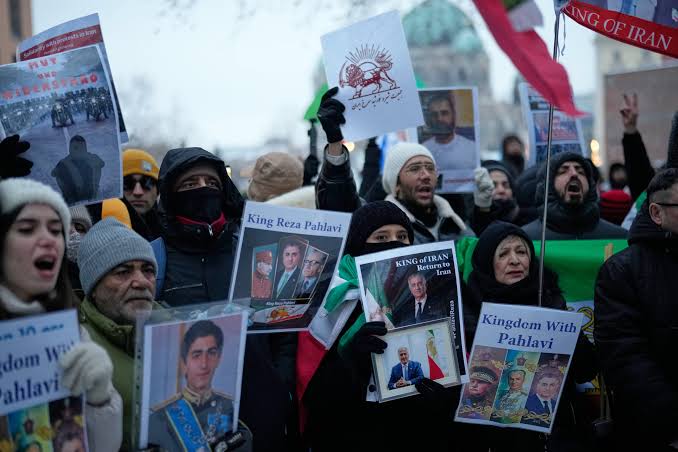
Calling on citizens to escalate demonstrations over the weekend, Pahlavi asked people to gather from 6 pm on Saturday and Sunday, carrying national flags, symbols, and images. He said the objective had moved beyond protest marches to asserting control over public spaces and key city centres.
“Our goal is no longer merely to come to the streets,” Pahlavi wrote in Persian. “The goal is to prepare for seizing the centres of cities and holding them.”
In a significant development, the exiled leader also hinted at his return to Iran, saying he was preparing to come back and stand with the people during what he termed the country’s impending “national revolution.” Pahlavi’s family left Iran ahead of the 1979 Islamic Revolution, after his father, Mohammad Reza Pahlavi, was overthrown.
The current wave of unrest began late last month with protests over economic hardship in parts of Tehran before rapidly spreading nationwide. According to the Human Rights Activists News Agency (HRANA), demonstrations have now reached over 500 locations across 180 cities in 31 provinces.
Large crowds were seen in major cities, including Tehran, on Thursday following Pahlavi’s earlier appeal for intensified agitation. In response, authorities reportedly restricted internet and telephone services, drawing criticism from rights groups.
Pahlavi has also appealed directly to US President Donald Trump, urging him to support protesters and intervene diplomatically. In a separate post, he said communication blackouts were enabling security forces to carry out a violent crackdown away from global scrutiny.
Rights groups report that at least 65 people have been killed and more than 2,300 detained since the protests began on December 28. Protesters have been heard chanting slogans against Iran’s supreme leadership, with some openly expressing support for a return to monarchy.
Tensions between Tehran and Washington remain high, with Supreme Leader Ayatollah Ali Khamenei and President Trump exchanging sharp rhetoric amid the escalating crisis.