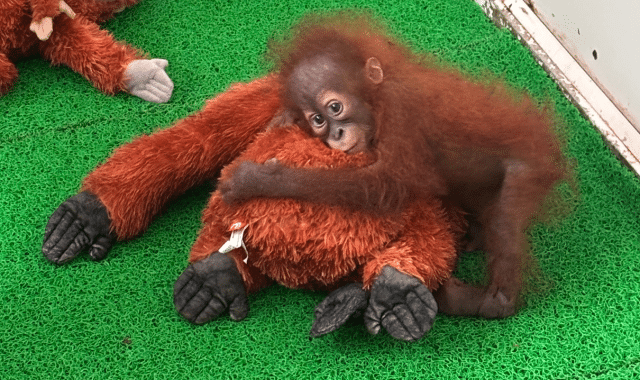
Five rescued baby orangutans at Nandankanan Zoological Park in Bhubaneswar are receiving specialized, round-the-clock care designed to mimic the nurturing environment of a human infant.
Separated from their mothers, these orphaned apes are currently adjusting to their new surroundings under the meticulous supervision of zoo authorities and veterinary experts.
To compensate for the lack of mother’s milk, caretakers are feeding the infants NAN Pro formula, which the apes have readily accepted. Their customized diet also features boiled apples and mashed potatoes. Feeding schedules are strictly maintained, with animal keepers setting mobile alarms every 1.5 to 2 hours.

A standard feeding consists of 200 ml of food for a 2.5 kg orangutan, while the younger infants receive half that amount. To prevent digestive issues, 10 ml of Bonnisan liquid is administered after meals in the morning, afternoon, and night.

The physical and emotional well-being of the orangutans remains the zoo’s top priority. Caretakers ensure windows and doors are kept open in the mornings so the infants receive adequate sunlight for Vitamin D synthesis. To soothe the animals and reduce the stress of adapting to a new environment, authorities have introduced classical music therapy while the babies relax on swings.

A dedicated team comprising three doctors and three animal keepers, operating under the guidance of senior veterinarian Dr. Sarat Sahu, monitors the orangutans 24/7 across three shifts. Top officials, including the Deputy Director, Director, and PCCF, regularly track the animals’ condition via CCTV. Nandankanan Deputy Director Pradeep Mirase stated that the feeding and medical protocols directly parallel the rearing of human children.

Former zoology professor Ajay Kumar Patra emphasized the importance of a natural environment, noting that wild orangutans typically stay with their mothers for at least three to four years and rely heavily on mother’s milk. He advised that the zoo should simulate this natural habitat rather than keeping them in closed enclosures.

Professor Indramani Nath, former head of the wildlife department at OUAT, praised the current medical arrangements, stating that this surrogate care is crucial for keeping the infants healthy and helping them acclimatize. Zoo authorities are optimistic that with this intensive maternal-style care, the young apes will soon fully adapt to their new home.