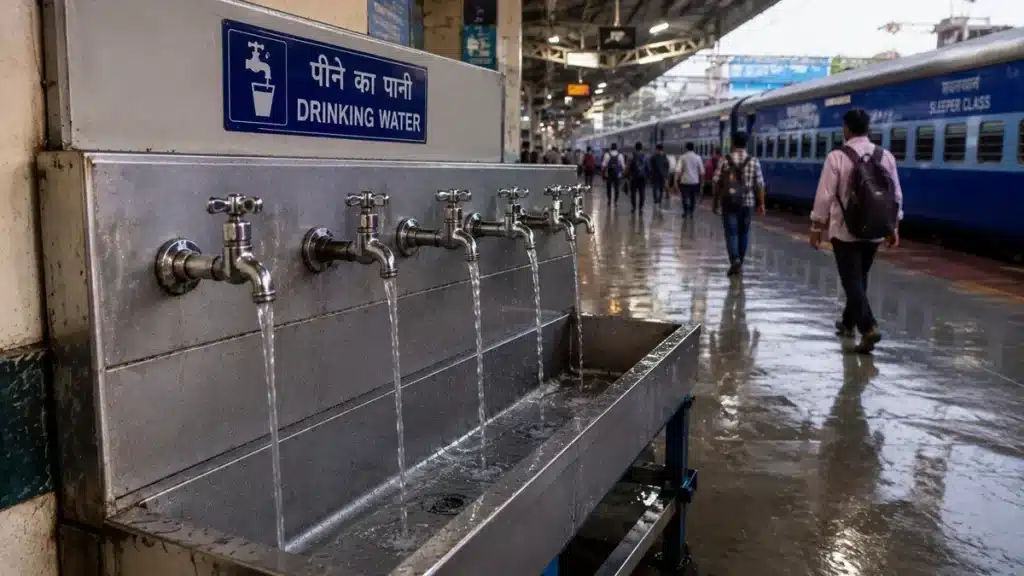
Indian Railways has launched a nationwide special cleanliness and hygiene drive focused on drinking-water infrastructure at railway stations, with authorities directed to clean and disinfect tanks, inspect filtration systems and conduct regular water-quality testing.
The initiative aims to ensure passengers have continued access to safe, clean and hygienic drinking water across the railway network.
According to the Ministry of Railways, the drive is part of a broader action plan to strengthen drinking-water quality management. The emphasis will be on preventive inspection and maintenance of the entire water-supply system, along with testing at both the source and point of consumption.
Tanks, pipelines and water booths to be inspected
As part of the special drive, Zonal Railways will conduct comprehensive inspections of drinking-water infrastructure, including:
- Water sources and treatment plants
- Underground and overhead tanks
- PVC tanks
- Water booths and taps
- Water dispensing points
- Filtration and purification systems
- Pipelines and related infrastructure
Drinking-water tanks will be drained, desludged, scrubbed and disinfected.
Railways will also ensure that tanks have tight covers and that vents and overflow points are adequately protected from birds, animals and algae.
Damaged tanks, pipelines and filters will be repaired or replaced wherever necessary. Officials will also check for cross-connections between potable and non-potable water systems and inspect drinking-water pipelines for leaks.
Water quality testing to get special focus
The action plan places considerable emphasis on testing water at different stages of the supply chain instead of depending only on end-point testing.
Officials will conduct physical, chemical and bacteriological tests at identified locations, including water sources, post-treatment outlets, tanks, coolers, vending machines and selected taps or water booths, wherever feasible.
Daily residual-chlorine monitoring will also be undertaken. Where required, immediate re-chlorination or other corrective measures will be carried out.
Water coolers, UV and RO systems under scrutiny
Railway authorities have also been directed to undertake comprehensive inspections of water coolers and purification systems.
Water-cooler tanks will be thoroughly cleaned, while leakages involving coolers, taps and pipelines will be addressed promptly.
Railways will ensure hygiene around water-cooler dispensing areas and check whether UV and RO purification systems are functioning properly.
Where required, new purification systems will be installed. Scheduled maintenance, servicing, overhauling and timely replacement of filter candles and other components will also be undertaken.
The same cleaning, purification and monitoring measures will apply to Water Vending Machines.
Special attention to hand pumps and borewells
Locations where drinking water is sourced through hand pumps and borewells will also receive special attention.
Zonal Railways have been directed to ensure that water drawn from these sources remains free from contamination and is safe for drinking.
Authorities will also work on suitable filtration and purification systems for different situations, including at-source and at-tap filtration, to identify and prevent contamination at various stages.
Station-wise deficiencies to be monitored
The Railway Board has instructed Zonal Railways to monitor sanctioned works for the replacement and construction of new overhead and underground water tanks.
Where additional infrastructure is required, fresh sanctions will be processed.
Importantly, Zonal Railways will submit station-wise details of deficiencies identified and corrective action taken. This will allow railway authorities to track pending issues and ensure that problems identified during inspections are addressed within a specified timeframe.
Drive to cover railway colonies and workplaces too
The drinking-water safety initiative will not be restricted to passenger areas.
Similar measures are planned for drinking-water infrastructure in Railway colonies and workplaces, extending the focus on safe and hygienic water to Railway personnel as well.
The Ministry said the coordinated measures are aimed at strengthening preventive inspection, infrastructure maintenance, cleaning and disinfection, water-quality testing and corrective-action mechanisms throughout the railway drinking-water system.
The drive is ultimately intended to ensure that passengers and Railway employees have access to safe, clean and hygienic drinking water.