
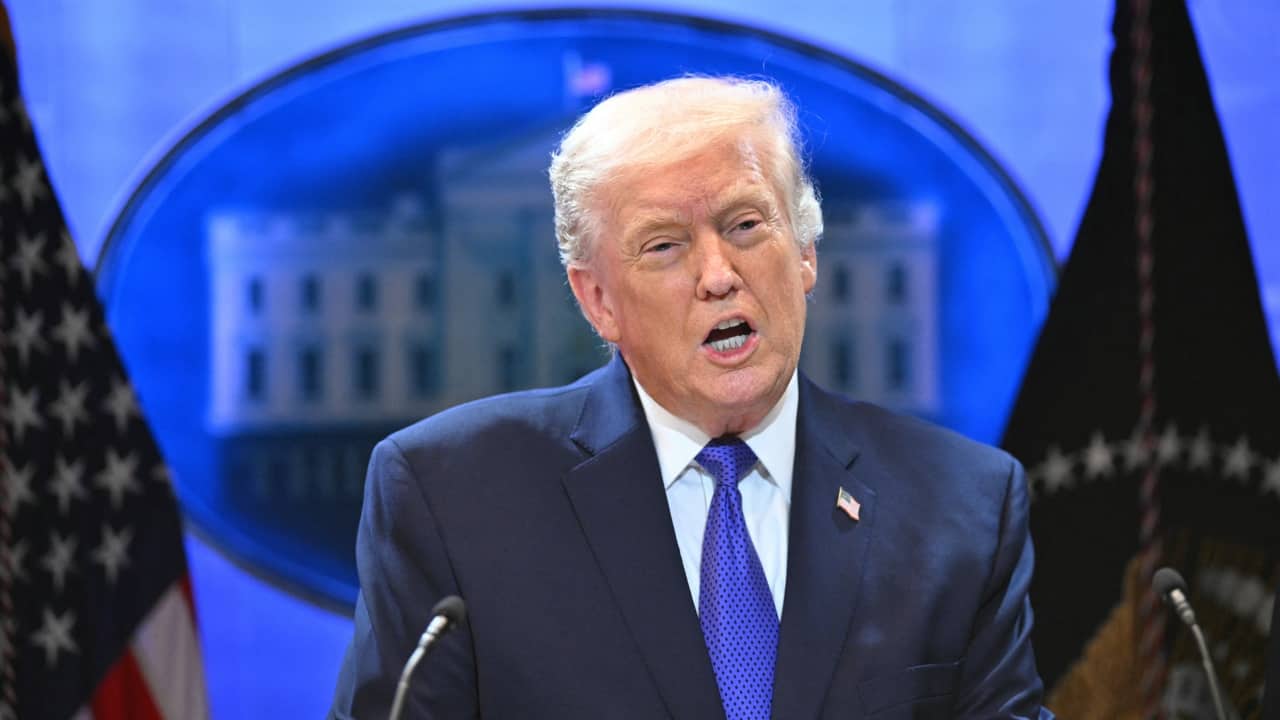
During his “People’s State of the Union” address on Tuesday, U.S. President Donald Trump defended his administration’s tariff strategy, despite a recent Supreme Court ruling striking down key aspects of the policy.
Speaking in a confident and declarative tone, Trump described the past year as a period of significant national progress. He maintained that tariffs had generated “hundreds of billions of dollars” in revenue, strengthening both the U.S. economy and national security.
Supreme Court Ruling Called “Unfortunate”
Trump characterized the Supreme Court’s decision to invalidate portions of his tariff authority as “very unfortunate.” However, he asserted that many countries and corporations involved in negotiated trade deals remain committed to maintaining existing agreements.
According to the president, the agreements were reached under his executive authority and could be renegotiated under new frameworks if necessary. He suggested that potential alternatives could be even more stringent.
“Despite the disappointing ruling, we are winning big,” Trump said, emphasizing that the negotiated deals continue to benefit the United States economically and strategically.
Claim: Tariffs Could Replace Income Tax
One of the most striking claims in Trump’s address was his assertion that tariff revenue could substantially replace the “modern-day system of income tax.”
He argued that foreign nations, rather than American taxpayers, ultimately bear the cost of tariffs. Over time, he said, this revenue model could reduce the financial burden on U.S. households.
“As time goes by, I believe the tariffs, paid for by foreign countries, will substantially replace the modern day system of income tax,” Trump stated.
Economists have long debated who ultimately absorbs tariff costs, with many analyses suggesting that importers and consumers often share the burden. Nonetheless, Trump framed tariffs as a tool that protects domestic industries, generates revenue, and strengthens America’s negotiating leverage in global trade.
Trade, National Security, and Global Negotiations
Trump further claimed that tariffs have played a role in advancing broader diplomatic objectives, including conflict resolution. He suggested that the threat of trade penalties contributed to stabilizing international tensions.
He also indicated that congressional action would not be required to sustain revised trade arrangements, describing his approach as “time tested and approved.”
The address underscored trade policy as a central pillar of his economic vision for 2026, positioning tariffs not only as a protective measure but as a potential restructuring of the federal revenue system.