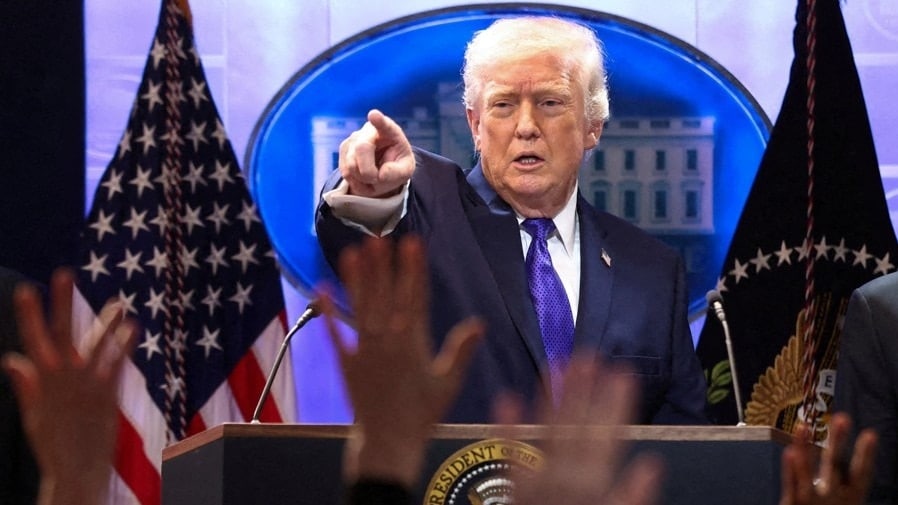
The Supreme Court of the United States has struck down former President Donald Trump’s sweeping global tariffs, ruling that the administration exceeded its constitutional authority by imposing broad trade taxes without congressional approval.
In a 6–3 decision, the Court held that the President’s use of the International Emergency Economic Powers Act (IEEPA) to levy wide-ranging import duties was unlawful. The ruling marks a significant development in US trade policy and raises key questions about previously collected tariff revenues and future trade agreements.
Why the Supreme Court Invalidated the Tariffs
Chief Justice John Roberts, writing for the majority, stated that the US Constitution grants Congress — not the President — the power to impose taxes and tariffs.
The Court concluded that the administration’s reliance on IEEPA, a 1977 law historically used for sanctions and asset freezes, did not provide clear congressional authorization for imposing sweeping global tariffs.
Roberts emphasized that any “extraordinary assertion” of executive authority in trade matters requires explicit approval from Congress, which was not present in this case.
Immediate Response: New 10% Global Tariff
Shortly after the ruling, Trump signed an executive order imposing a new 10% global tariff on foreign goods. The measure, announced from the Oval Office, is set to take effect on February 24 at 12:01 a.m. Washington time.
The White House indicated that the administration may also consider additional trade actions under Section 301 (unfair trade practices) and Section 232 (national security) provisions.
Treasury Secretary Scott Bessent stated that the new duties are expected to result in minimal change to overall tariff revenue projections for 2026.
India-US Trade Deal: What Changes?
The ruling has prompted reactions from global partners, including India and France. French President Emmanuel Macron responded to the Court’s decision, underscoring the importance of predictable global trade frameworks.
In India, Union Minister Pralhad Joshi said the government will carefully examine the Supreme Court’s verdict before issuing an official response. He noted that the matter falls under the jurisdiction of the Commerce Ministry and the Ministry of External Affairs.
Despite the Court’s ruling, Trump stated that the India-US interim trade framework remains intact. Under the existing arrangement:
-
Tariffs on Indian goods were reduced from 25% to 18%.
-
India committed to adjusting certain energy procurement policies.
-
The US removed punitive tariffs linked to India’s purchase of Russian oil.
Trump asserted that “nothing changes” in the India-US trade agreement following the Court’s decision.
What Happens to Already-Collected Tariffs?
A key issue now is whether importers will receive refunds for tariffs already collected under the invalidated policy.
Legal experts suggest that refund mechanisms could involve administrative review by US trade authorities, though the precise oversight structure remains unclear. Lawmakers from the Democratic Party have called for a structured refund process to ensure fairness for businesses and consumers.
Global and Political Reactions
The ruling has intensified debate in Washington. Trump criticized members of the Court who ruled against him, while some lawmakers described the decision as a reaffirmation of constitutional checks and balances.
International markets are closely watching how the administration’s new 10% global tariff will affect supply chains, consumer prices, and trade negotiations in 2026.
What Comes Next?
The Supreme Court’s decision reasserts congressional authority over trade taxation and may reshape the executive branch’s ability to impose unilateral tariffs in the future.
At the same time, the newly announced 10% worldwide levy signals that trade tensions and policy adjustments are likely to continue.
Businesses, policymakers, and global partners will now monitor:
-
Implementation of the new 10% tariff
-
Potential legal challenges
-
Refund procedures for prior collections
-
The stability of the India-US trade deal
The evolving situation underscores the continuing impact of US trade policy decisions on global markets and international partnerships.