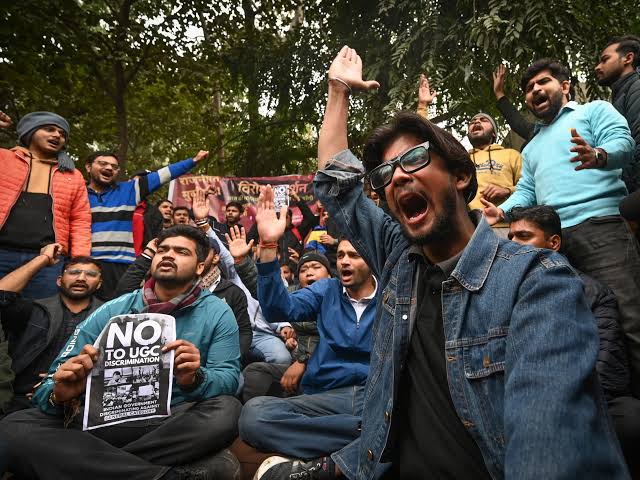
Delhi University (DU) has imposed a one-month ban on public meetings, demonstrations, processions, and protests across its campus, citing concerns over safety, traffic obstruction, and public order.
The order, issued on February 17 by the university’s Office of the Proctor, follows recent tensions linked to protests over the University Grants Commission (UGC)’s proposed anti-caste discrimination rules.
According to the directive, the decision was taken after receiving inputs that “unrestricted public gatherings” could escalate and adversely affect law and order within the campus.
Background: Protests and Recent Incidents
The move comes in the wake of multiple incidents on campus. Last week, two FIRs were registered by Delhi Police following a scuffle between student groups during a protest concerning the UGC’s anti-casteism guidelines.
The controversial rules are currently under review by the Supreme Court of India. While some General category students have termed the rules biased, several anti-caste and social justice groups have demanded their implementation.
In a separate incident on February 12, historian S Irfan Habib had a bucket of water thrown at him while speaking at a programme focused on social justice issues.
What the DU Order States
The order references earlier instructions issued by the Assistant Commissioner of Police, Civil Lines, restricting public gatherings, torch processions, slogan-shouting, and speeches that could disrupt public tranquillity or traffic flow.
Manoj Kumar, Proctor of DU, stated in the directive that past protests had, in some instances, escalated beyond the organisers’ control, resulting in disturbances to campus order.
Under the new restrictions, the following activities are prohibited:
-
Assembly of five or more persons
-
Public meetings, demonstrations, and processions
-
Slogan-shouting and speeches
-
Carrying hazardous materials, including mashals, beacons, or torches
The ban has taken immediate effect and will remain in force for one month unless withdrawn earlier.
Reactions to the Ban
Mithuraj Dhusiya, Associate Professor of English at Hansraj College and a member of the DU Executive Council, described the move as a “blanket clampdown.”
While acknowledging the need for peaceful conduct and campus order, Dhusiya questioned whether traffic obstruction should justify a complete ban on gatherings. He also raised concerns about whether the decision may impact mobilisations related to faculty appointments, implementation of the National Education Policy (NEP), the UGC Equity Bill, and recent teacher suspensions.
Dhusiya further argued that the Proctor’s Office does not have unilateral authority to impose a blanket prohibition on public meetings and called for the order to be reconsidered.