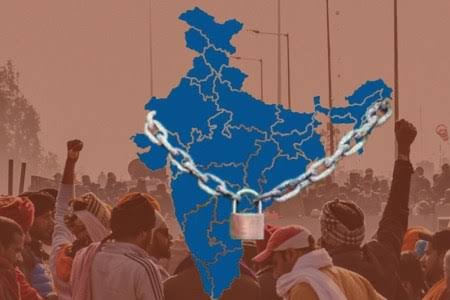
India prepares for widespread disruption tomorrow, February 12, as central trade unions and farmers’ organisations enforce a Bharat Bandh against government policies and trade agreements.
Ten central trade unions, including CITU, AITUC, INTUC, HMS, AICCTU, LPF, and UTUC, have called the strike. They oppose the new labour codes, claiming they weaken workers’ rights and reduce job security. Farmers’ groups such as Samyukt Kisan Morcha and All India Kisan Sabha also support the bandh, opposing the India–US trade deal that they say harms domestic agriculture and dairy sectors.
Public sector banks expect heavy disruption as employees’ unions AIBEA, AIBOA, and BEFI join the protest. Customers may face difficulties with branch operations, cheque clearances, cash deposits, and withdrawals.
Markets and shops in protest-hit areas may remain closed. Schools and colleges in affected states could suspend classes. Road blockades or “chakka jam” demonstrations may disrupt traffic movement. Train services may also face interruptions if agitators stage rail roko protests.
Private offices may function depending on local conditions. Emergency services such as hospitals and ambulances will remain open.
Organisers expect participation from nearly 30 crore workers across 600 districts, surpassing the July 2025 mobilisation of 25 crore workers. Farmers, industrial labourers, and student groups have pledged support, making the Bharat Bandh tomorrow one of the largest coordinated strikes in recent years.