
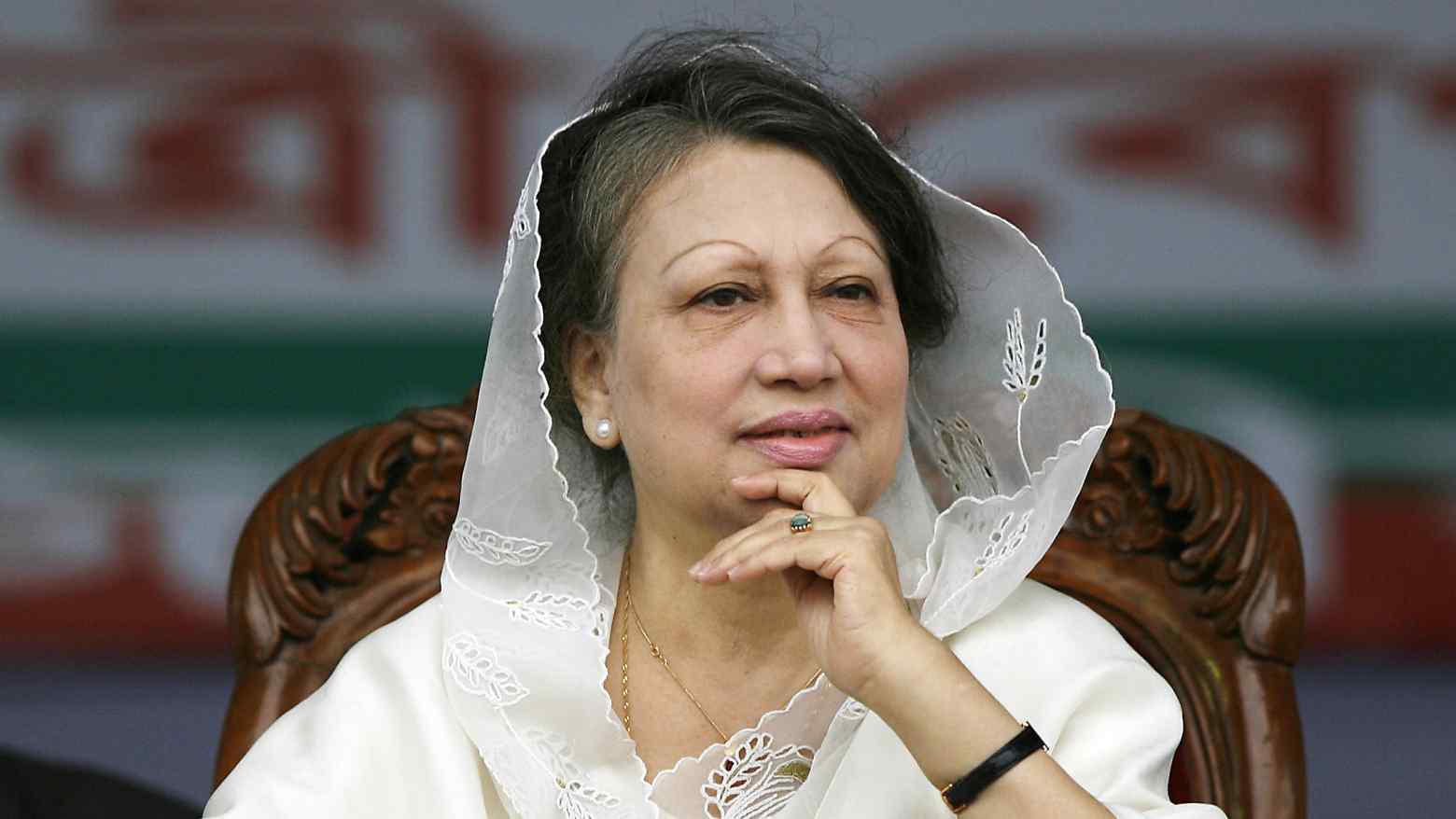
Khaleda Zia, Bangladesh’s first female prime minister and a central figure in the country’s political history, passed away on Tuesday morning at the age of 80 following a prolonged illness, the Bangladesh Nationalist Party (BNP) confirmed.
According to the party, Khaleda Zia died at around 6:00 am, shortly after the Fajr prayer. Her doctors stated that she had been suffering from multiple health conditions, including advanced liver cirrhosis, diabetes, arthritis, and heart and chest-related complications.
In a statement shared on its official Facebook page, the BNP said, “We pray for the forgiveness of her soul and request everyone to offer prayers for her departed soul.”
Funeral Arrangements
Senior BNP leader Salahuddin Ahmed said Khaleda Zia’s funeral is likely to be held at Manik Mia Avenue in Dhaka on Wednesday, according to local media reports.
Longstanding Health and Legal Challenges
Khaleda Zia had faced serious health issues for several years. In 2018, she was convicted in a corruption case linked to the misuse of funds meant for orphans and sentenced to prison. Her sentence was later suspended in 2020 on medical grounds, with restrictions on travel and political activity.
In January this year, Bangladesh’s Supreme Court overturned her conviction and acquitted her in the case. The BNP has consistently maintained that the legal actions against her were politically motivated during the tenure of her longtime rival, former prime minister Sheikh Hasina.
A Trailblazer in Bangladeshi Politics
Khaleda Zia served as prime minister from 1991 to 1996, and again from 2001 to 2006, becoming the first woman to lead the country. She came to power through a democratic election in 1991 and played a key role in restoring the parliamentary system of governance.
Her tenure also saw the introduction of the caretaker government system, designed to ensure free and fair elections—an institutional reform that significantly shaped Bangladesh’s electoral framework.
Widow of former president and army chief Ziaur Rahman, Khaleda Zia emerged as one of South Asia’s most influential political leaders. Despite periods of imprisonment and political setbacks, she remained a defining presence in Bangladesh’s political landscape.
Family
She is survived by her elder son Tarique Rahman, his wife, and their daughter. Tarique Rahman returned to Bangladesh on December 25, ending 17 years in exile.