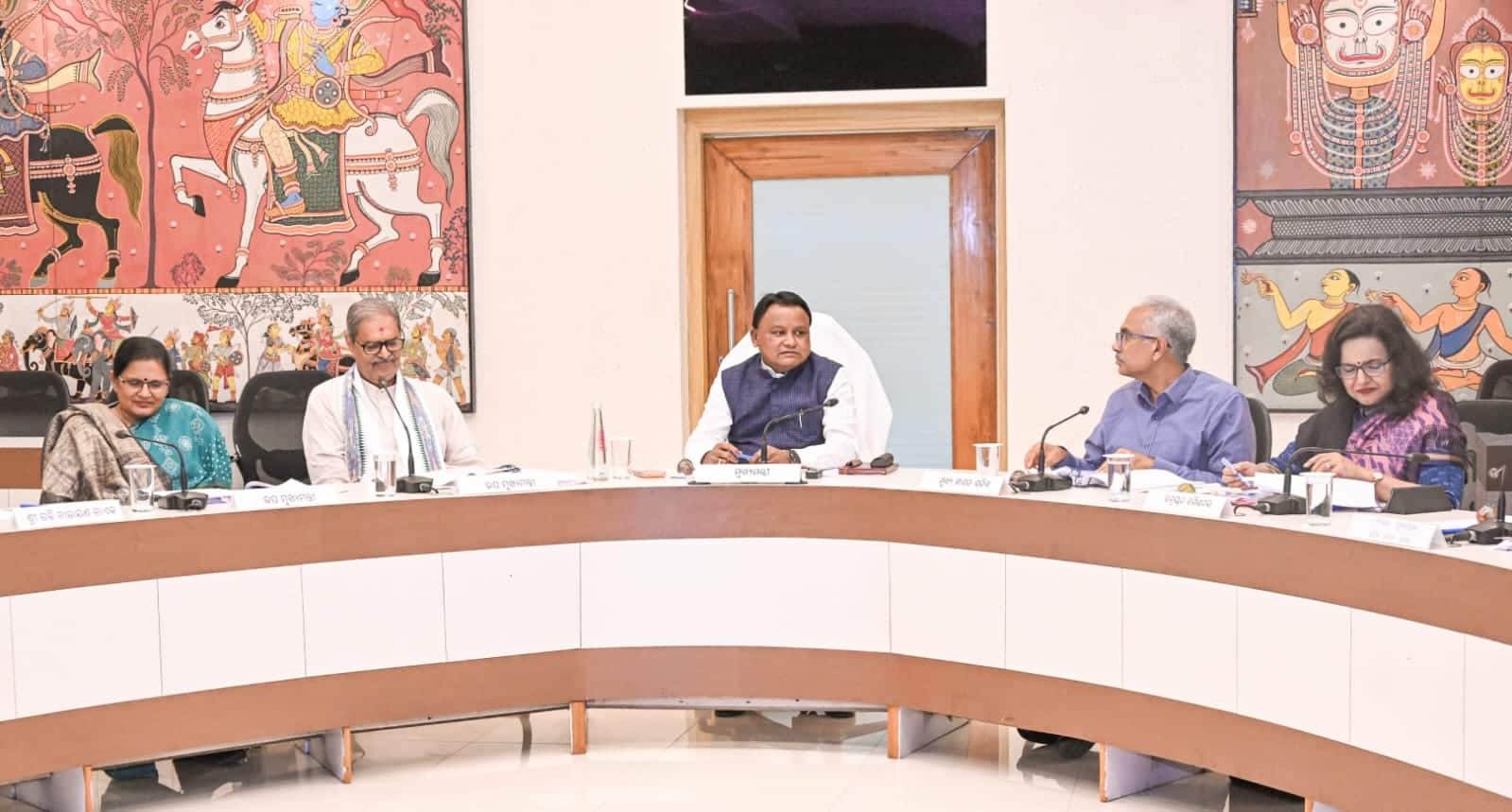
In its 33rd meeting held under the chairmanship of Chief Minister Mohan Charan Majhi, the Odisha State Cabinet approved 10 proposals from seven departments, marking significant strides in cultural preservation, rural development, skill enhancement, and higher education equity.
The highlight of the meeting was the approval of the ‘Baraputra Aitihya Grama Yojana’, a dedicated scheme to honour Odisha’s illustrious sons – freedom fighters, poets, litterateurs, educationists, and social reformers. In the first phase, 25 selected eminent personalities’ native villages will be developed with up to ₹15 crore each, totalling ₹345 crore.
Key features include converting their ancestral homes into museums, installing statues/memorials, establishing interpretation centres, libraries, conference halls, open-air theatres, children’s parks, and sales outlets for local cuisine, handicrafts, and handlooms. Regular seminars, discussions, and cultural programmes will promote their ideals and contributions to future generations.
Chief Secretary Manoj Ahuja briefed the media, emphasising that the scheme aims to immortalise the sacrifices and values of these icons, inspiring citizens towards social progress.
In another major decision, amendments were made to the guidelines of the **’Bikashit Gaon Bikashit Odisha’** scheme to ensure greater transparency and community participation in project selection. Proposals will now be publicly notified, reviewed by district-level committees, and finalised by the District Collector. Additionally, all projects above ₹10 lakh will mandate a three-year defect liability period to guarantee long-term quality.
To bolster skill development, the Cabinet decided to upgrade five government Industrial Training Institutes (ITIs) into **’Utkarsh ITIs’** as zonal hubs. The selected ITIs are in Puri, Balangir, Aswaguada (Koraput), Rajkanika (Kendrapada), and Rourkela (Sundargarh). These will feature modern labs, smart classrooms, industry-aligned training, entrepreneurship cells, and stronger placement support to prepare youth for emerging job markets.
On the higher education front, the Cabinet approved the Odisha State Government Universities (Reservation in Teachers’ Cadre) Ordinance 2025. This introduces a uniform reservation policy across all state universities, treating each institution as a single unit with post-based rosters. The move replaces department-wise reservations, aiming to increase representation of SC, ST, SEBC, and other categories while simplifying recruitment and aligning with national standards.
These decisions reflect the government’s commitment to cultural heritage, transparent governance, skilled workforce development, and inclusive education, paving the way for a progressive Odisha.