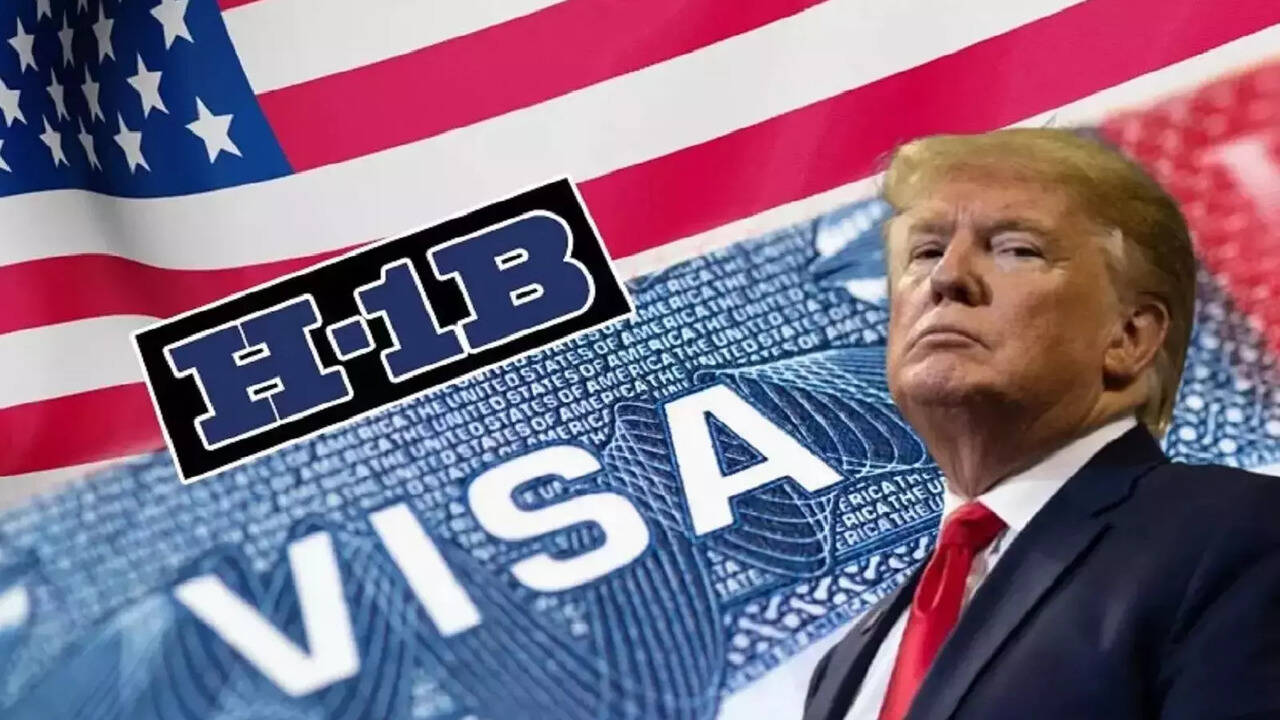
The Donald Trump administration has introduced a new set of stringent vetting rules for H-1B visa applicants, further tightening the approval process for highly skilled foreign workers. The move follows the significant fee hike announced in September, which raised the H-1B visa application cost to $100,000.
H-1B visas remain vital for US technology companies, especially those recruiting talent from India and China. Several leaders in the American tech industry publicly supported Trump during last year’s presidential election.
State Department Issues New Rejection Guidelines
According to a Reuters report, an internal US State Department memo outlines updated rules instructing consular officers to screen applicants for involvement in activities that could be categorized as “censorship” of free speech.
The directive—sent to US embassies and consulates worldwide on December 2—requires officers to examine:
-
Resumes
-
LinkedIn profiles
-
Employment history of applicants and accompanying family members
Applicants who have worked in areas such as misinformation, disinformation, content moderation, fact-checking, compliance, or online safety may face additional scrutiny.
The memo states officers should consider an applicant ineligible if evidence shows they were responsible for or complicit in censoring protected expression under applicable sections of the US Immigration and Nationality Act.
The State Department has not officially commented on the memo.
Heightened Screening for Tech Sector Applicants
The guidance notes that H-1B applicants warrant special attention, as they frequently work in sectors such as:
-
Social media
-
Technology services
-
Financial services
-
Online platforms involved in content regulation
“You must thoroughly explore their employment histories to ensure no participation in such activities,” the memo instructs consular officials.
The enhanced vetting applies to both new and returning H-1B applicants.
Free Speech as a Foreign Policy Priority
The Trump administration has increasingly framed free speech—particularly concerns about the perceived suppression of conservative viewpoints online—as a central element of its foreign policy.
US officials have spoken out against alleged censorship in multiple European nations, including Romania, Germany, and France, criticizing measures intended to counter disinformation as restrictions on political speech.
In May, US Secretary of State Marco Rubio warned that visa bans could be imposed on individuals involved in silencing American speech on digital platforms. His remarks suggested the policy could extend to foreign regulators overseeing US tech firms.
The administration has already expanded vetting for student visas, directing consular officers to review applicants’ social media activity for posts deemed hostile towards the United States.