When the Indian National Developmental Inclusive Alliance (INDIA) convened in Delhi on Saturday morning, the atmosphere was grim.
With Nationalist Congress Party (Sharadchandra Pawar) MP Supriya Sule’s seven Lok Sabha colleagues and Dravida Munnetra Kazhagam (DMK) president MK Stalin’s 22 MPs poised to back the Centre’s delimitation and women’s reservation bill, the BJP-led NDA appeared close to securing the 360 votes needed for a two-thirds majority.
Following an hour-long briefing by Congress MP Jairam Ramesh and independent MP Kapil Sibal on how the constitutional amendment could permanently reshape India’s electoral map, one leader urged immediate action: “Listen, we have 36 hours; we have to do something.”
Rejecting phone calls as insufficient, Rahul Gandhi and Trinamool Congress’s Derek O’Brien championed a grand, in-person outreach to remind “frenemies” Stalin and Sharad Pawar of their alliance roots.
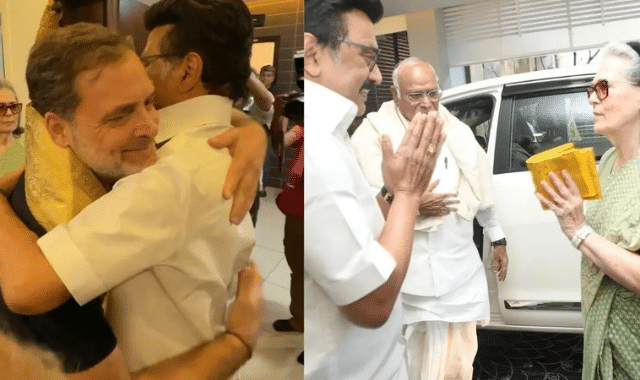
The bloc turned to 79-year-old Congress Parliamentary Party chairperson Sonia Gandhi to lead the delegation alongside 84-year-old Congress president Mallikarjun Kharge, Mamata Banerjee, and Congress chief ministers, while Uddhav Thackeray agreed to join in Mumbai. All 11 leaders vowed strict secrecy.
By Sunday morning, Mamata Banerjee flew to Delhi, quietly boarding one of two chartered planes bound for Chennai. A brief wrinkle emerged when DMK MP Kanimozhi—who had met Union Home Minister Amit Shah the previous night—visited Kharge to explain the DMK’s stance and note that Stalin was tending to his ailing mother.
Undeterred, Kharge and the delegation proceeded to Chennai, where Stalin welcomed Sonia Gandhi and the opposition leaders at his residence.
As O’Brien noted, the outreach goes beyond parliamentary arithmetic—it is about “standing up for the idea of India.”