India is rapidly shedding its historical dependence on imported medical technologies to emerge as a global hub for indigenous medical innovation and affordable, cutting-edge healthcare, Union Minister Dr Jitendra Singh stated on Saturday.
However, he cautioned the next generation of doctors against letting Artificial Intelligence and advanced diagnostics replace fundamental bedside clinical judgment.
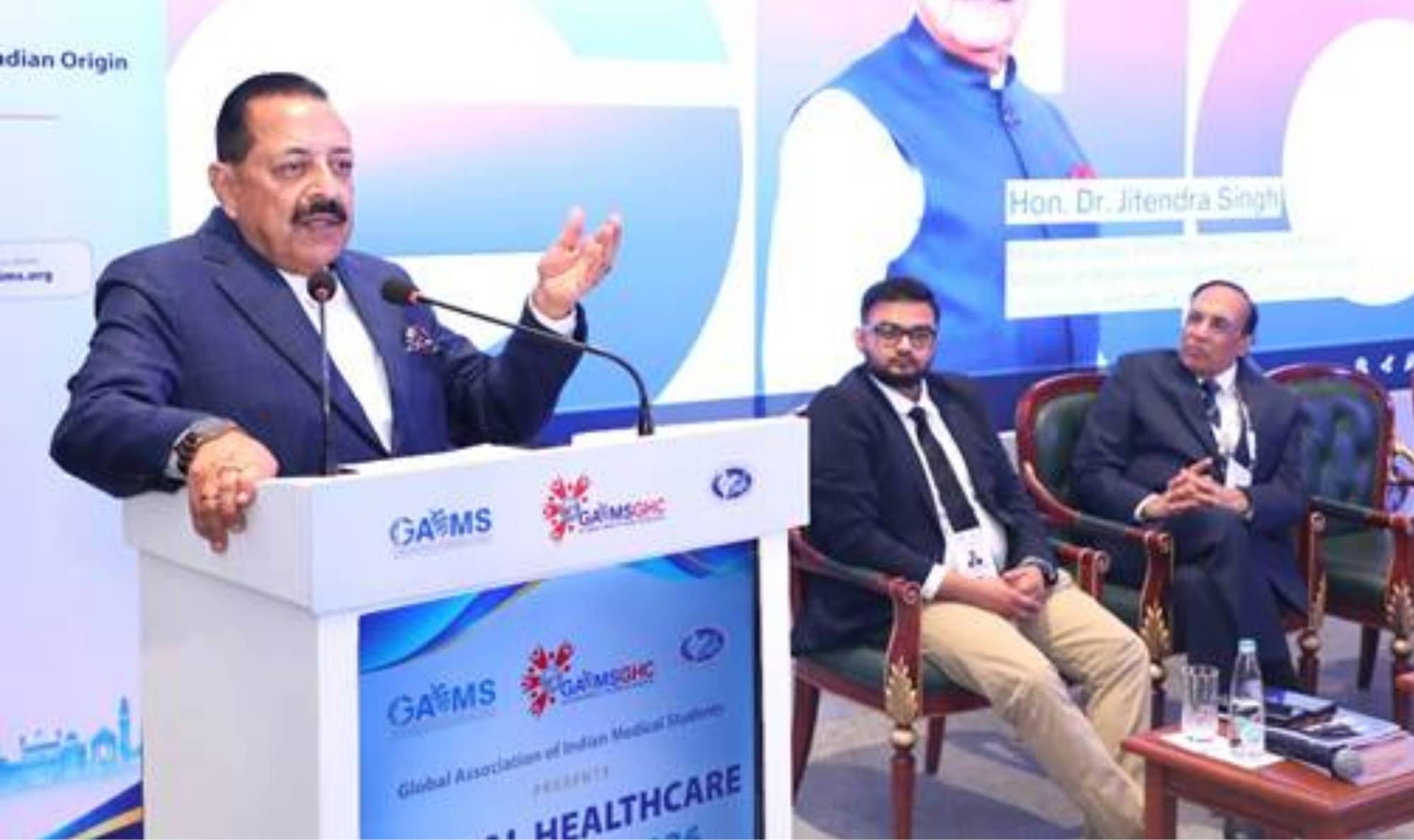
Speaking at the Global Healthcare Conclave 2026—organised by the Global Association of Indian Medical Students (GAIMS)—Dr. Singh outlined a sweeping transformation in India’s medical ecosystem. Once viewed primarily as a manufacturing destination for foreign-developed drugs, India is now pioneering novel therapies, positioning itself as a key contributor to the vision of Viksit Bharat 2047.
Breakthroughs in Indigenous Medicine
Highlighting the country’s scientific strides, the Minister pointed to several landmark achievements that are lowering the cost of complex treatments:
-
Cancer & Gene Therapy: Indigenous CAR-T cell therapy research at Tata Memorial Centre, Mumbai, and successful haemophilia gene therapy trials at Christian Medical College (CMC), Vellore—published in the New England Journal of Medicine—showcase India’s capability in high-end therapeutics.
-
Novel Antibiotics & Vaccines: Two indigenously developed antibiotics have emerged over the past two years (including one marketed by Wockhardt), alongside the nationwide HPV vaccination drive that has already inoculated over 50 lakh adolescent girls.
-
Genomics & Metabolic Research: Under the Indian Genome Programme, 10,000 to 15,000 individuals across 84 distinct population groups have been sequenced toward a one-million-genome target. Researchers are also genetically engineering E. coli to produce GLP analogues to combat insulin resistance.
Tackling India’s Dual Disease Burden
Dr Singh noted that while India has made strides against infectious diseases, it now faces a sharp rise in non-communicable and metabolic disorders—such as Type-2 diabetes, cardiovascular disease, hypertension, and fatty liver disease—increasingly affecting younger Indians.
Pointing out the unique “thin-fat” phenomenon of central obesity in Indian populations, where seemingly lean individuals carry high visceral fat, the Minister stressed the urgent need for India-specific medical data and preventive healthcare. He added that initiatives like Ayushman Bharat and the expansion of district-level dialysis units are critical to ensuring financial protection and equitable access.
Technology as a Tool, Not a Crutch
Drawing from his own background as a medical practitioner, Dr Singh expressed concern over an over-reliance on diagnostic scans and lab tests. While encouraging students to master AI, quantum technologies, and precision medicine, he insisted that investigations must support—not substitute—direct patient interaction and physical examination.
He also called on medical education bodies to prioritise practical, hands-on clinical competence in postgraduate training so doctors remain effective even in low-resource settings.
During the event, which was attended by NBEMS Vice President Dr Minu Bhajpai and GAIMS National Chairman Dr Shubham Anand, Dr Singh released the conclave’s official souvenir and urged young medical professionals to bridge academic research, clinical care, and public health advocacy.