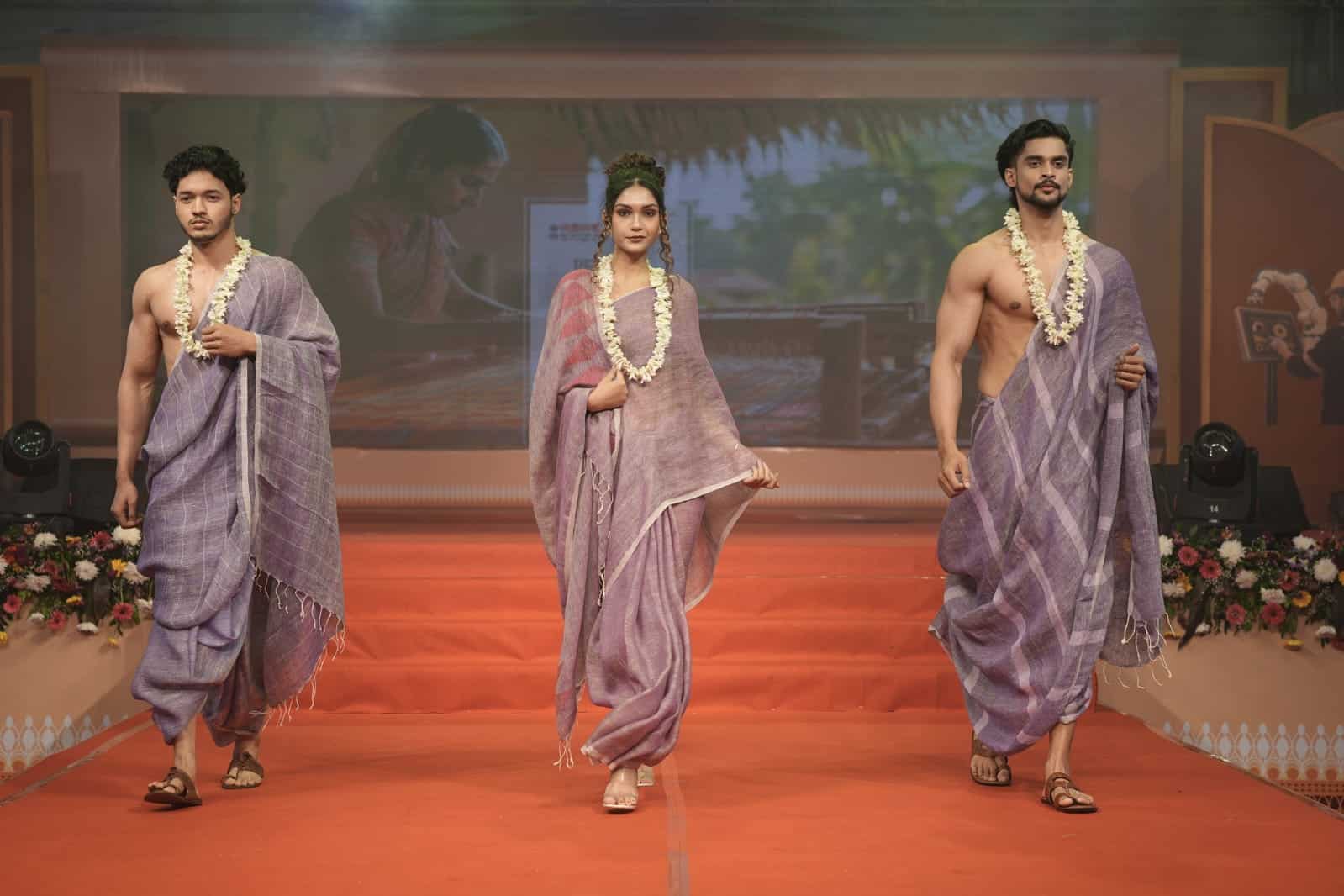
Handspun Khadi stepped onto the runway in a bold contemporary avatar during the Khadi & MSME Expo–2026, pairing India’s classic weave with global zero-waste craft traditions.
Set to rhythmic music, models presented Khadi across varied textures, colours, weaves, and silhouettes that framed heritage handloom as a dynamic choice for modern wardrobes.
Organised as a highlight of the Khadi & MSME Expo–2026, the runway showcase unfolded across four distinct sequences. Rather than treating handloom as static nostalgia, the presentation spotlighted how traditional weaves adapt to current styling while honouring rural artisan skill.
Three early sequences demonstrated the range of contemporary Khadi design:
-
First sequence: Debasmita Giri, representing Soul by Indian, opened the thematic progression with fresh, modern silhouettes.
-
Second sequence: Lipsa Hembram of Galang Gabaan brought distinct artistic character and texture to the handloom pieces.
-
Third sequence: Romi Das of Orivvaa framed Khadi as an expressive medium for contemporary fashion.
Confidence, poise, and expressive runway presence from the models carried each designer’s vision across the stage.
Cross-Cultural Zero-Waste Finale
The fourth sequence stood out as the evening’s centrepiece, uniting Ganjam’s traditional Kantha craft with Japan’s Boro textile tradition in garments designed by Pankaja Sethi, with showstopper Dr Bhumika Das leading the presentation. Pairing craft idioms from Odisha and Japan turned the sequence into a cross-cultural dialogue rooted in shared resourcefulness.
Both Ganjam Kantha and Japanese Boro emerged from practical rural traditions centred on thrift and repair. Artisans layer worn fabric scraps and stitch them by hand, turning ageing cloth into durable, textured textiles with renewed utility. On the runway, that ethos of purposeful reuse met modern tailoring to show how sustainable craft can command attention today.
Connecting Weavers with New Markets
Designers noted that showcases like the Khadi & MSME Expo–2026 do more than display garments—they create visibility for weavers and craftspeople while introducing Khadi to younger buyers and emerging markets. By pairing time-tested handwork with modern design language, the event pointed toward a more relevant and forward-looking identity for Khadi.