Once shadowed by Left-Wing Extremism (LWE), Odisha’s Kandhamal district is writing a new chapter defined by roads, mobile connectivity, and grassroots welfare.
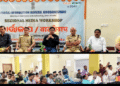
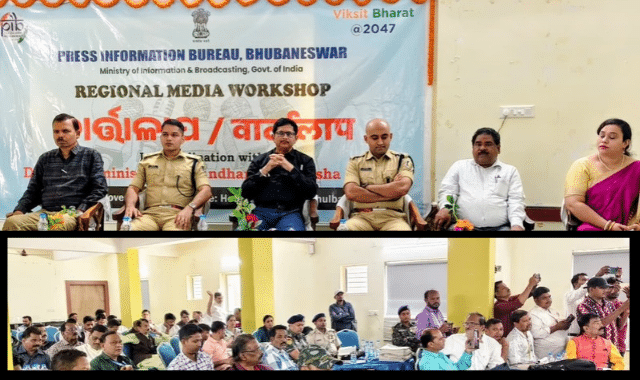
This transformation took centre stage on Thursday at ‘Vartalap,’ a regional media workshop organised by the Press Information Bureau (PIB), Bhubaneswar, in collaboration with the Kandhamal district administration and Odisha Police.
Presiding over the event, Akhil Kumar Mishra, Additional Director General of PIB and Central Bureau of Communication (CBC), Bhubaneswar, emphasised that sustained development is the ultimate antidote to extremism. Reviewing progress made since the Government of India’s March 31, 2026 declaration on LWE-affected districts, Mishra cited sweeping infrastructure milestones across formerly affected regions—including 15,199 km of newly constructed roads, 9,497 mobile towers, and 1,804 bank branches. Bringing these achievements into public discourse, he noted, is vital to overcoming lingering fear and fulfilling local aspirations.
Echoing this shift on the ground, Kandhamal Superintendent of Police Ramendra Prasad revealed a dramatic decline in extremist activity, noting that active Maoists in the district dropped from over 100 in 2025 to single digits by March 2026. Crediting coordinated operations by the Special Operations Group (SOG), District Voluntary Force (DVF), and intelligence wings, Prasad stressed that “violence is never the answer,” urging democratic grievance redressal and the rehabilitation of surrendered cadres.
The administrative push behind this peace was detailed by Additional District Magistrate Kushal Chandra Naik, who highlighted the resolution of 500–600 pending pension cases and swift relief for weather-affected families. Academician Dr Elsie Mishra added that education, scholarships, and hostels under the pillars of Vishwas, Nirman, and Jan Kalyan are actively dismantling the economic deprivation that once fueled insurgency.
Offering a sobering look at the cost of peace, Assistant Commandant Ashish Kumar Sarkar presented a history of Maoism in Odisha—from the 2004 formation of specialised anti-Naxal units and the 2008 Nayagarh armoury attack to the targeted obstruction of rural infrastructure.
The workshop paid tribute to police bravery, featuring firsthand accounts from Inspector Amaresh Chandra Narendra, Inspector Debasish Sai, and ASI Jeetendra Nayak—who sustained a bullet injury during the February 2024 Kakerkupa operation that neutralised senior Maoist cadre Dasru alias Dudu Mundari.
In a poignant highlight, surrendered former Maoists shared candid reflections on life inside the movement, underscoring the value of reintegration into mainstream society. Moderated by PIB Assistant Director Mahendra Prasad Jena following a welcome address by CBC Assistant Director Pradeep Kumar Choudhury, the workshop concluded with an interactive dialogue between journalists and officials, spotlighting Kandhamal’s steady march toward lasting stability.