In a significant push to preserve indigenous wisdom and foster sustainable economic opportunities for tribal communities, the Central University of Odisha (CUO) kicked off a two-day launch programme for the project “Integrated Conservation, Agro-technology & Bioresource Enterprise Development for Sustainable Tribal Livelihoods” at its Sunabeda campus on November 12, 2026.
Supported by the Ministry of Tribal Affairs (MoTA), Government of India, and implemented by the CSIR-National Botanical Research Institute (CSIR-NBRI), Lucknow, the initiative was launched as part of the Janajatiya Gaurav Divas Pakhwada (November 1–15, 2026), commemorating the birth anniversary of Bhagwan Birsa Munda.
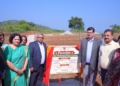
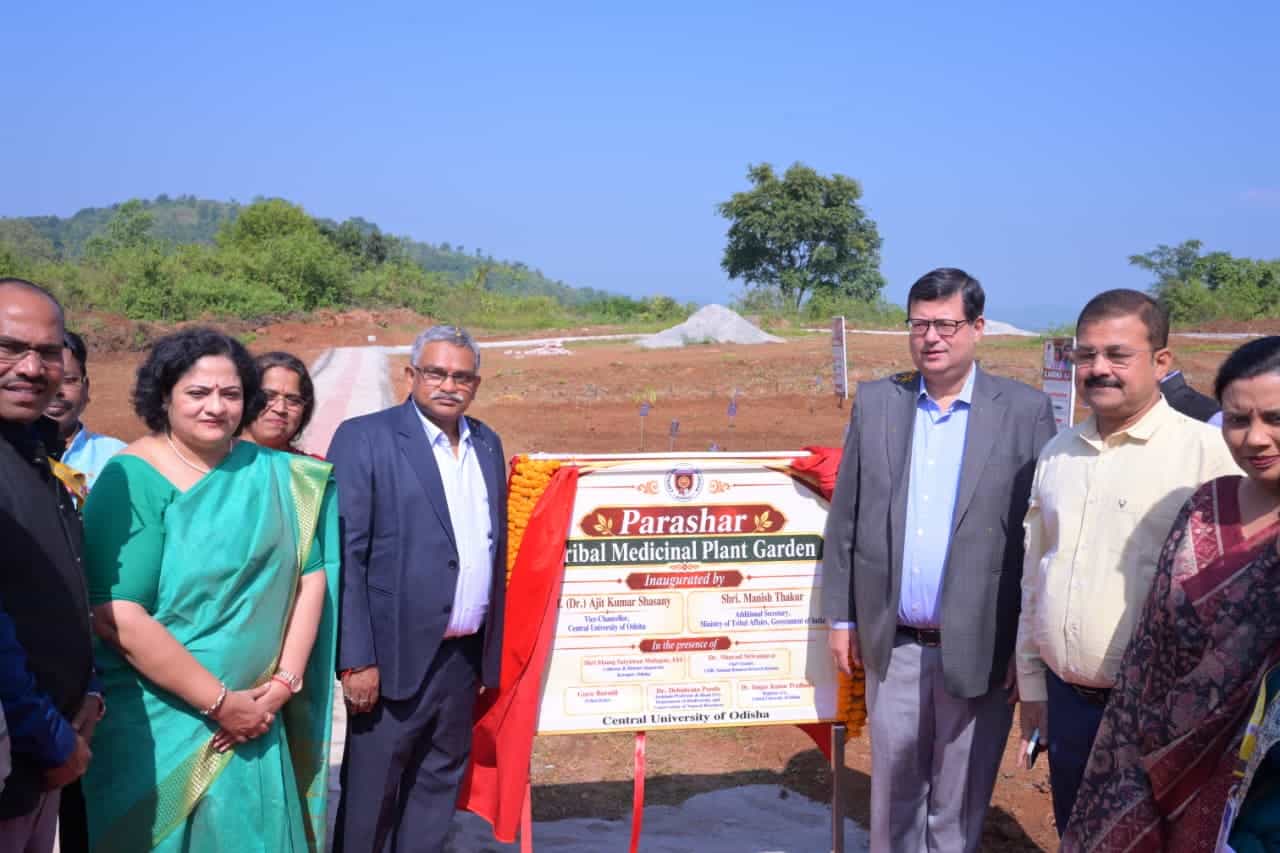
A major highlight of the inaugural day was the joint inauguration of the “Parashar Tribal Medicinal Plant Garden” on the CUO campus. Housing over 300 distinct species of medicinal plants, the garden will serve as a living repository for conservation and research.

Following the inauguration, dignitaries and visitors explored a special exhibition where local tribal healers from Koraput showcased rare medicinal flora and traditional healing practices. Around 25 tribal healers from the district participated in the event and were felicitated for their invaluable contributions to traditional healthcare.
Addressing the gathering as Chief Guest, Manish Thakur, IAS, Additional Secretary, Ministry of Tribal Affairs, emphasised the need for multi-stakeholder collaboration to uplift tribal livelihoods. He revealed that 16 tribal hotspots have been identified nationwide under this initiative, including three in Odisha: Koraput, Kandhamal, and Balangir. Expressing optimism about the project’s long-term impact, Thakur noted that combining conservation with enterprise development would help tribal communities evolve into self-sustaining institutions.
Prof. (Dr.) Ajit Kumar Shasany, Vice-Chancellor of CUO, underscored the urgency of systematically documenting and disseminating the oral traditions of tribal healers while safeguarding endangered plant species for future generations. He stressed that blending traditional skills with scientific methods, institutional backing, financial aid, and technical support—such as establishing medicinal plant nurseries and large-scale cultivation—is vital for securing the livelihoods of tribal practitioners.
Also Read:
Green Gold: India Launches Mega Initiative to Conserve Medicinal Plants and Boost Tribal Livelihoods
Earlier, Dr. Sharad Srivastava, Scientist-G at CSIR-NBRI and Principal Investigator of the project, delivered the welcome address and outlined the project’s roadmap. He highlighted the crucial role of the media in amplifying the initiative’s objectives so that its benefits reach the intended grassroots beneficiaries. Dr. Debabrata Panda, Nodal Officer of the programme at CUO, proposed the vote of thanks.
The event saw wide participation from scientists, industry leaders, policymakers, and students. Notable attendees included Dr. Sanjaya Kumar Pradhan (Registrar I/c, CUO), Dr. Harishita Bhatnagar and Shri Jayant Kumar (Joint Advisers, MoTA), Dr. Sudhansu Kumar Meher (Central Ayurveda Research Institute, Bhubaneswar), Dr. C.S. Mohanty and Dr. Adarsh Tiwari (CSIR-NBRI), Shweta Mishra (Odisha TWD, UNDP Advisor), Binod Kumar Mishra (Tribal Domain Expert), ICMR scientists Dr. Suman S. Mohanty, Dr. Jaya Singh Kshatri, and Dr. Kaushik Sanyal, Dr. Babu UV (Director, Himalaya Wellness Company, Bengaluru), Ms. Snehaprabha Majhi (ITDA Project Administrator, Koraput), journalist Laxmi Narayan Baxi, and Dr. Rajendra Padhy.
The two-day programme continues with targeted awareness workshops for local healers, field visits to study native medicinal flora, and interactive sessions with tribal communities across the region.