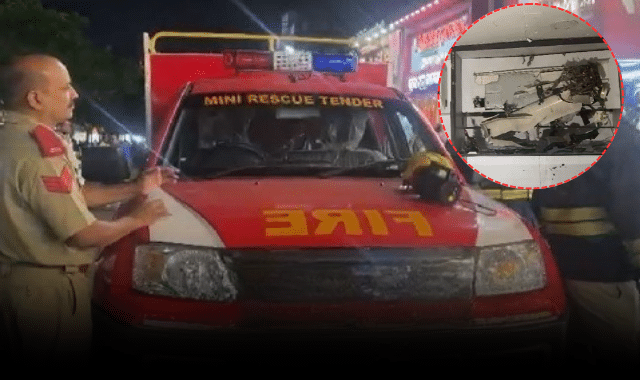
A routine AC maintenance job turned into a terrifying explosion at Bhubaneswar’s Unit-2 Market Building on Thursday, critically injuring two technicians and sending shockwaves through the surrounding shops.
The blast was so loud that nearby shops shook. Locals immediately rushed the injured men to Capital Hospital. Capital police and fire service teams reached the spot within minutes and took control of the situation. Preliminary information suggests the compressor exploded during gas refilling, possibly due to a technical fault or sudden high-pressure build-up. No other casualties have been reported so far. Police have begun an investigation to establish the exact cause.
Market Building has long been one of the capital’s primary shopping destinations. The number of daily visitors has only grown with the city’s expansion. Yet the infrastructure has not kept pace.
Large parts of the building are ageing. Basic facilities such as water supply and smart kiosks frequently remain non-functional. Shopkeepers routinely spill goods onto corridors and footpaths, while electrical wiring is often haphazard. These practices increase congestion and delay emergency responders. The complex has witnessed fires and other incidents in recent years, repeatedly highlighting weak safety standards.
Traffic and parking remain persistent headaches. Vehicles park haphazardly on surrounding roads because of limited dedicated parking. Even with extra traffic police during peak periods, jams are common. Regular patrolling is essential for crowd control and crime prevention, but shopkeepers and residents say everyday presence needs to be strengthened beyond festival seasons.
Expansion and modernisation proposals from shopkeepers’ associations have been discussed for years, yet progress has been slow. The city has grown rapidly, but Market Building’s basic safety and access arrangements have not improved at the same rate. Thursday’s explosion has brought these long-standing concerns back into focus.
Emergency Access Crisis in Market Building and Unit-1 Market
The problem of emergency vehicles reaching the scene is acute in both Unit-2 Market Building and the densely packed Unit-1 Market, which has suffered repeated major fires — nearly 97 shops were gutted in January 2026, and two more shops were destroyed in August. In every case, fire tenders have been forced to operate from the main road because the internal lanes are too narrow and heavily encroached. Plastic, polythene and other highly combustible materials stored in shops allow flames to spread rapidly.
To address this, the Bhubaneswar Municipal Corporation has planned underground pipelines, hydrant points and sprinklers. Around ₹26 crore has been sanctioned for the project, and some shops have already been demolished to widen roads. Full implementation, however, is still pending. Ambulances face the same difficulties: narrow lanes, chaotic parking and heavy crowds cause critical delays.
Similar issues exist at Market Building. Dedicated emergency corridors, regular structural and electrical inspections, and stricter enforcement of occupancy and safety norms are now urgent requirements for both markets.
The Thursday incident serves as a clear warning. In a city where commercial hubs see massive daily footfall, safety cannot remain an afterthought. Regular audits, enforced standards and improved emergency preparedness are no longer optional — they are essential.